
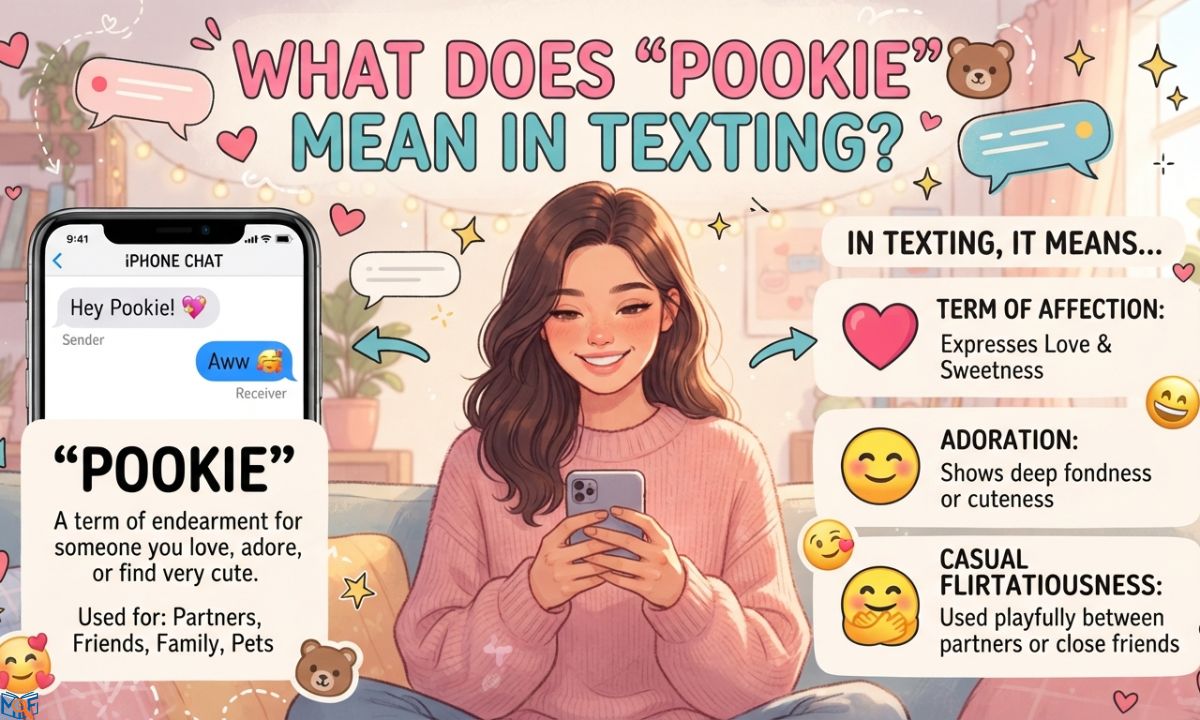

If you’ve been scrolling TikTok or opening your texts lately, you’ve probably seen the word “pookie” pop up everywhere. Someone’s boyfriend is their “pookie,” a TikTok creator calls her followers “pookies,” and even strangers in comment sections are throwing the word around like they’ve known each other for years.
So what does pookie actually mean? In short, Pookie Meaning is a slang term of endearment used to describe someone you care about deeply, whether that’s a partner, a close friend, or even a pet. It’s warm, playful, and a little bit silly, which is exactly why it has taken over group chats and social media captions.
Meaning & Definition of Pookie
Primary Meaning:
Pookie is a term of endearment used for someone you love or feel close to. It’s most commonly used for romantic partners, but it isn’t limited to romance.
Secondary Meaning:
In some older or regional slang, Pookie Meaning has also referred to a smoking pipe used with drugs. This usage is far less common today and mostly appears in older internet dictionaries rather than everyday conversation.
Example:
“Good morning, pookie! Hope you have the best day.”
| Context | What Pookie Means |
| Texting a partner | A cute nickname, similar to “babe” or “honey” |
| Talking to a friend | A playful, affectionate nickname |
| Talking about a pet | A term showing love for an animal |
| Older slang | A pipe used for smoking drugs (rare, mostly outdated) |
Background & Origin of the Word “Pookie”
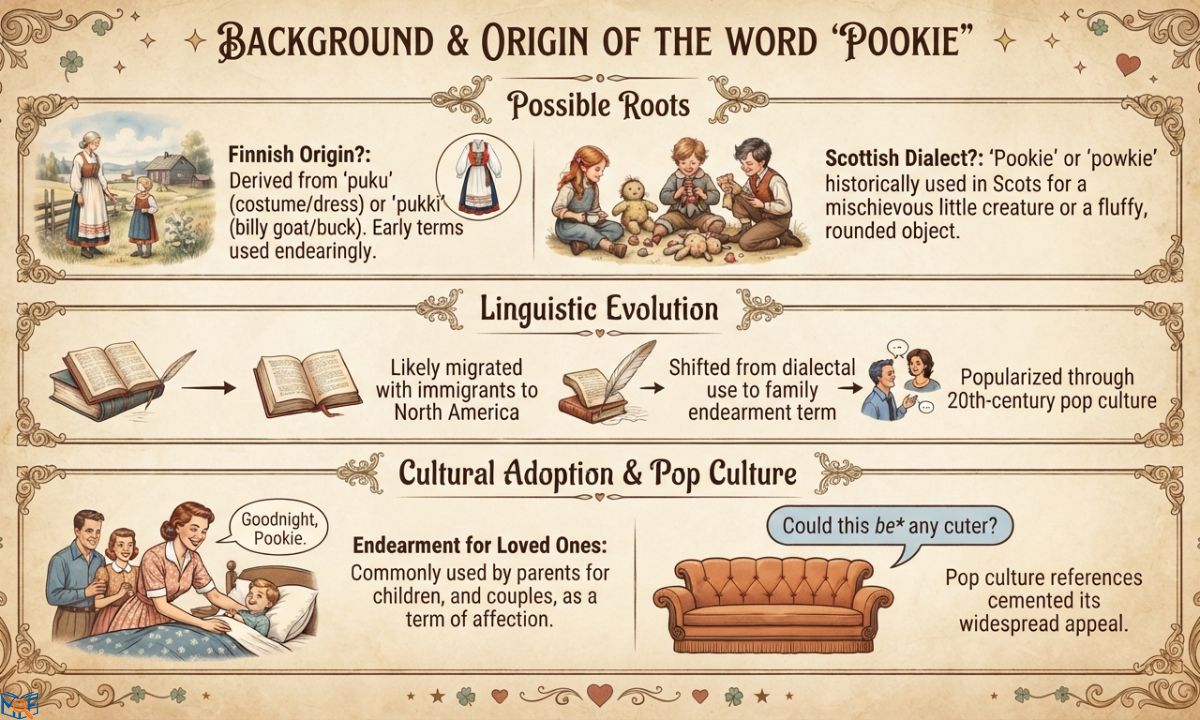
The word has a surprisingly long history. Language researchers trace early written use of Pookie Meaning as a term of affection back to the 1960s<cite index=”2-1″>, with print records showing pookie used as a general term of endearment by that decade, though it had already been used earlier as a nickname for specific people.</cite>
Some word historians point to even older roots. One theory traces the term to Celtic folklore, where a “púca” or “pooka” was a mischievous, shape-shifting creature in Irish and Scottish stories<cite index=”4-1″>, with one documented use of the word appearing in an 1867 short story by Scottish author George MacDonald.
Usage in Different Contexts
Pookie Meaning shifts slightly depending on who’s saying it and to whom. Here’s how it typically shows up:
Romantic Context
This is the most common way people use Pookie Meaning today. It works as a substitute for “babe,” “baby,” or “love” between couples.
- “I miss you, pookie.”
- “My pookie surprised me with flowers.”
Friendly Context
Close friends often use pookie to show affection without any romantic meaning at all.
- “Happy birthday, pookie!”
- “Text me when you’re home, pookie.”
Pet Context
Pet owners use pookie as a nickname for their dog, cat, or other animal companion, much like “baby” or “sweetie.”
- “Pookie needs her walk.”
- “My pookie just turned one year old today.”
Online Memes
On TikTok and Instagram, pookie is often used as a lighthearted way to address an audience or followers, almost like calling everyone “besties” or “friends.”
- “Okay pookies, let’s get into today’s outfit.”
Common Misconceptions & Mistakes
Common mistakes:
- Assuming pookie is always romantic
- Thinking the word is brand new internet slang
- Believing it only refers to the older, negative slang meaning
Reality:
Pookie Meaning is flexible. It can describe a partner, a friend, a pet, or even a stranger online, and its dominant meaning today is affectionate and lighthearted, not negative.
The drug-related slang meaning does exist, but it’s rarely how the word is used in everyday texting or social media.
Meanings Across Platforms
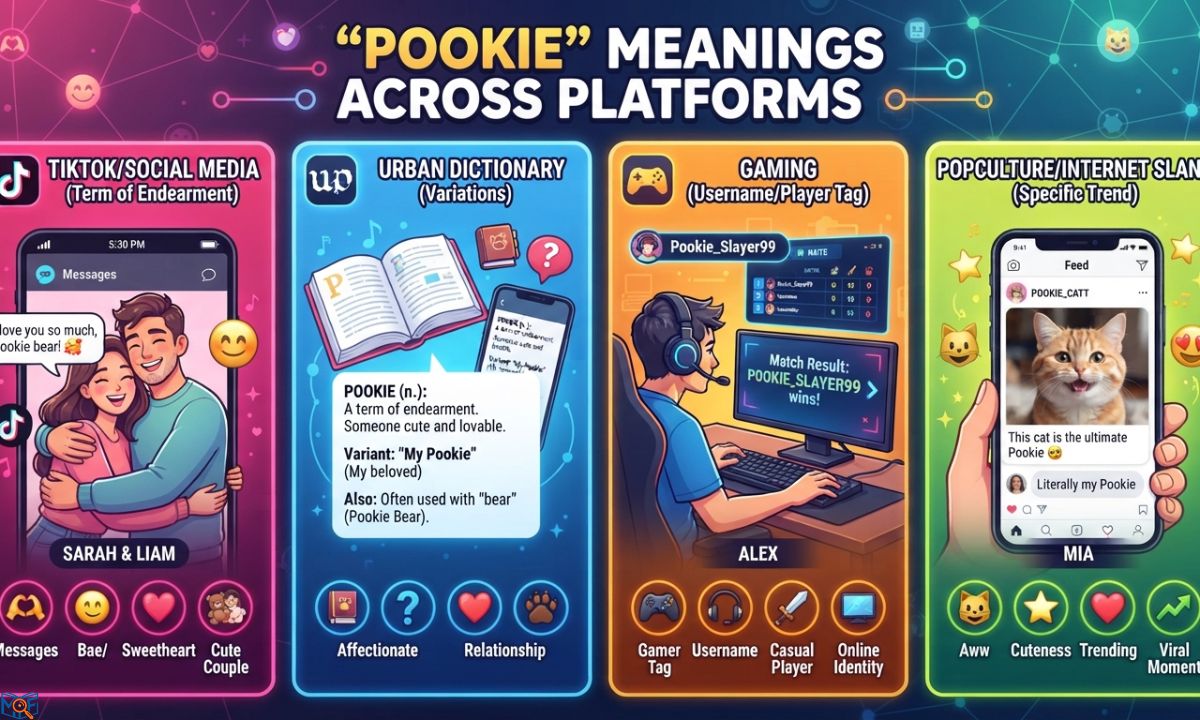
| Platform | Common Usage of Pookie Meaning |
| Used as a private nickname between partners or close friends in one-on-one chats | |
| Used in captions, comments, and DMs to describe a partner or close friend | |
| TikTok | Used to address followers collectively, or to caption couple and pet videos |
| Snapchat | Used as a saved contact nickname or in captions for close friends and partners |
On WhatsApp, pookie usually appears as a saved contact name or a casual nickname used in one-on-one conversations, especially between couples.
Instagram users often use pookie in comments and captions, especially under couple photos, pet posts, or friendship pictures.
TikTok
TikTok helped push pookie back into the mainstream. Creators use it to address their audience directly, which makes viewers feel like they’re part of an inside joke or a close friend group.
Snapchat
On Snapchat, pookie tends to stay more private, often used as a nickname saved for a specific close friend or partner rather than a public label.
Other Fields (Technical or Formal Meanings)
Outside of slang and social media, Pookie Meaning doesn’t have a recognized technical, scientific, or formal meaning. It hasn’t been adopted into business, legal, medical, or academic language. Its use remains firmly rooted in casual and affectionate communication.
Similar Terms & Alternatives
If you’re looking for words with a similar feel to pookie, here are some common alternatives:
- Babe
- Baby
- Honey
- Sweetheart
- Boo
- Bestie
- Cutie
- Love
| Term | Typical Use |
| Pookie | Romantic partner, close friend, or pet |
| Boo | Mostly romantic partner |
| Bestie | Close friend, rarely romantic |
| Honey | Romantic partner or close family |
How to Respond to “Pookie”
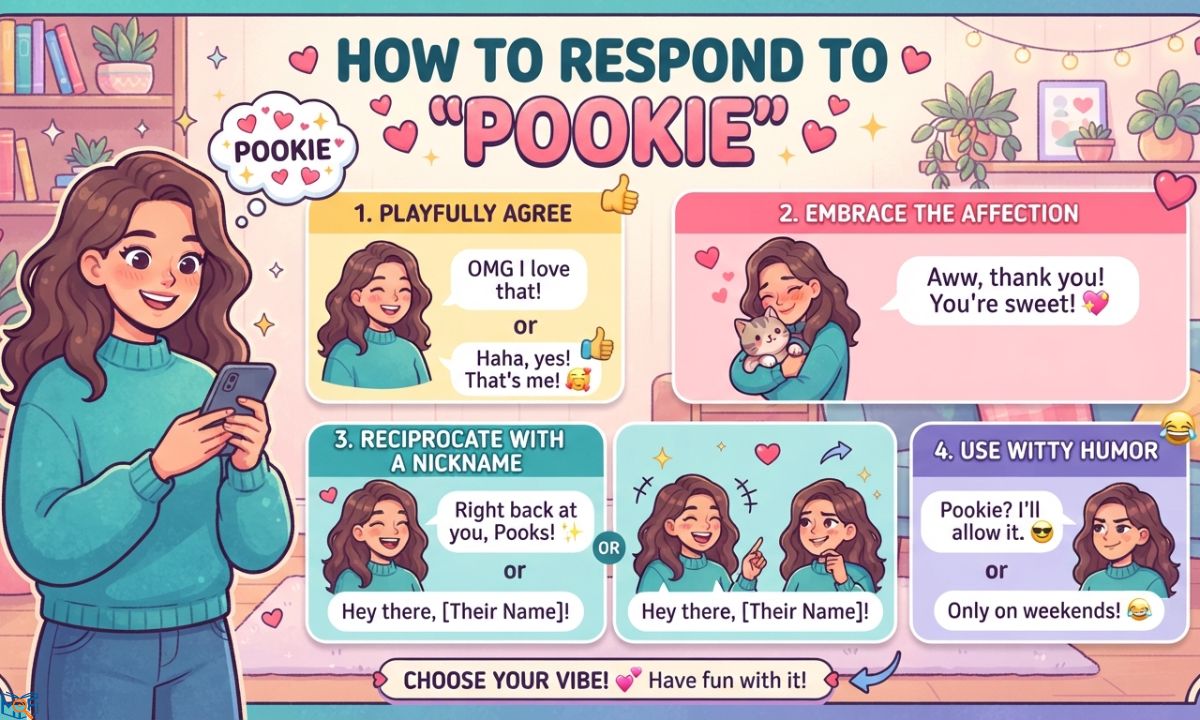
If someone calls you their pookie, the right response depends on your relationship with them and how you feel about the nickname.
Examples:
- If you like it: “Aww, I love that! Hi pookie.”
- If it’s a friend being playful: “Ha, okay pookie, what’s up?”
- If you’re not comfortable with it: “I appreciate it, but I’m not really a nickname person!”
There’s no wrong way to respond as long as it feels honest to how you feel about the nickname and the person using it.
Relevance in Online Conversations & Dating Apps
Pookie Meaning has become especially common on dating apps and in early-stage texting conversations. Using it early can feel flirty and fun, signaling interest without being overly serious.
On dating apps specifically, some users see an early “pookie” as a sign the other person is comfortable and playful, while others may find it too soon depending on personal preference. Reading the tone of the conversation matters more than the word itself.
Differences From Similar Words
While pookie shares space with words like “babe” or “boo,” it carries a slightly softer, more playful tone. Where “babe” can sound more classic or mature, pookie feels younger and more tied to internet culture.
It’s also more flexible than most similar terms, since it comfortably applies to partners, friends, and pets alike, while words like “boo” are almost always romantic.
Popularity & Trends Over Time
Pookie isn’t a brand-new word, but its popularity has moved in waves. It quietly existed as a term of endearment for decades before resurfacing through pop culture references and, more recently, exploding again through TikTok trends and couple content.
Today, it remains one of the most recognizable affectionate nicknames used across texting and social platforms, particularly among younger generations.
FAQs
What does pookie mean in a relationship?
Pookie means a loving nickname for a partner. It shows closeness and affection.
Why do people call each other pookie on TikTok?
It’s a trendy, affectionate nickname. Creators use it to sound warm and playful.
What does pookie mean in slang?
Pookie is a term of endearment. It shows love or closeness toward someone.
Is pookie romantic?
Yes, it’s often romantic. It can also mean a close friend or pet.
Can I call my friend pookie?
Yes, it’s common between friends. It shows affection, not just romance.
Is pookie a bad word?
No, it’s generally a friendly word. An older, rare slang meaning exists but isn’t common.
Conclusion
Pookie meaning comes down to one simple idea: affection. Whether it’s used for a partner, a friend, or a pet, the word carries warmth and closeness. Its journey from old slang to TikTok trend shows how language keeps evolving with each generation.
Next time someone calls you pookie, you’ll know exactly what it means and how to respond. Curious about other trending words and their meanings? Explore more slang guides on our website to stay in the loop.

John Julian is the founder and head wordsmith at MeaningFacts.com, a dedicated digital resource for word origins, definitions, and cultural linguistics. With over 5 years of experience as a lexicographer and content researcher, John Julian specializes in breaking down complex etymologies into accessible, engaging stories.