

You open a chat and see “TW: anxiety” above a long message. What does that mean?
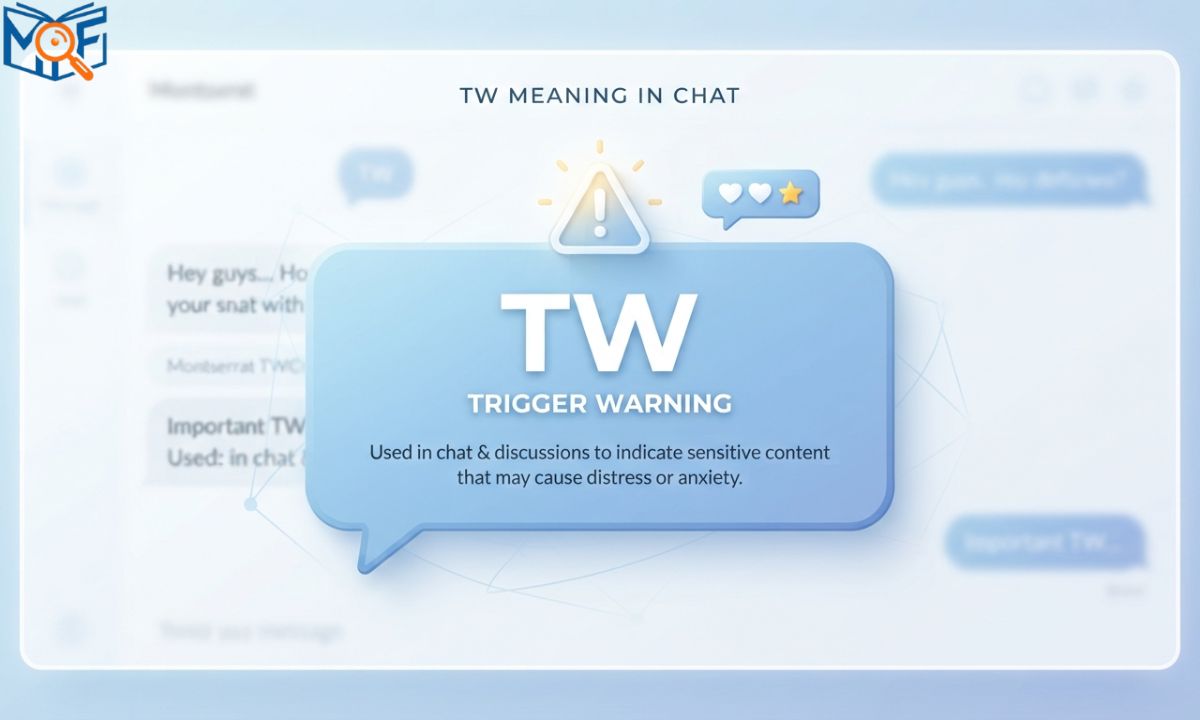
TW meaning in chat is almost always “trigger warning.” It tells you the next message may upset some readers. This guide explains what TW means, where it came from, and how to use it well.
TW Meaning in Chat – Quick Meaning
Quick answer: TW stands for trigger warning. People type it before content about violence, abuse, grief, or other heavy topics.
A trigger warning is a short notice placed ahead of content that could cause emotional distress, especially for people with past trauma. It gives readers a choice to continue or skip. socialbee
Quick meanings of TW
| Meaning | Where you’ll see it | How common |
| Trigger warning | Chats, captions, comments | Most common |
| “Toh” (Roman Urdu) | WhatsApp and text chats | Common in Pakistan |
| Trans woman | LGBTQ+ spaces | Occasional |
| Older posts and chats | Less common | |
| Tomorrow | Casual texts | Rare |
| Treatment week / total weight | Pharmacology and gemstone listings | Specialist |
| Taiwan (.tw) | Web domains | Technical |
Examples
- “TW: violence. This clip shows a street fight.”
- “tw // grief. Long post about losing my dad.”
- “Main tw late aaunga.” (Roman Urdu: “I’ll be late, then.”)
Origin & Background

The idea of a “trigger” comes from trauma research. Studies of PTSD after World War I described how reminders of trauma can set off intense reactions. dictionary
Online, forums and blogs began adding written warnings in the 2000s. Tumblr and Twitter later shortened it to “TW.”
Why social media made TW popular
Feeds autoplay, so you can’t predict what appears next. “TW:” is quick to type and easy to spot. It also lets users mute the topic words they’d rather not see.
TW Meaning in Pakistan
Pakistani users mostly see TW as a trigger warning on TikTok, Instagram, and X. It shows up more as people speak openly about harassment, abuse, and mental health.
There’s a catch. In Roman Urdu, “tw” often means “toh.” If it sits mid-sentence, it’s probably “toh.” If it opens a post and a topic follows, it’s a warning.
TW Meaning in Urdu
Most Urdu speakers simply say “trigger warning” in English (ٹرگر وارننگ). In plain Urdu, you could explain it as حساس مواد سے پہلے انتباہ, meaning “a warning before sensitive content.”
Real-Life Conversations
WhatsApp Chat
Sara: TW: accident. Long story, but I’m okay.
Hina: Thanks for the warning. Call me when you’re free?
TikTok Comments
A creator posts a video on losing a loved one. A commenter writes, “Should’ve had a TW on this.” Creators often add it to the caption after that.
Instagram DMs
A friend sends a screenshot with “tw: blood.” You can decide whether to open it now or later.
Text Messages
“TW: hospital talk. Are you free to chat?” It prepares the other person before the conversation starts.
Emotional & Psychological Meaning
Why People Use It
People use TW to show care. It helps those with trauma, anxiety, or grief avoid being caught off guard. It also signals that the writer thought about their audience.
Research on how well trigger warnings reduce distress is mixed. Treat TW as a courtesy, not a medical safeguard.
A Real-Life Scenario
Imagine a woman posts about her father’s death and adds “TW: death, grief.” Her friend, who lost her mother last month, sees the tag and scrolls past. A week later, she comes back and reads it when she feels ready.
That small choice is the whole point of TW.
Usage in Different Contexts
Social Media
TW goes at the start of a caption, in the first frame of a video, or at the top of a thread. Name the topic after it, like “TW: abuse.”
Work & Professional Settings
Most workplaces prefer full words. Write “Content note: this report discusses workplace injury.” It’s clearer and more professional.
TW meaning medical
TW isn’t a standard medical abbreviation for patients. In pharmacology, it can mean “treatment week.” Abbreviations vary by hospital, so ask a doctor or pharmacist before guessing.
Friends & Relationships
Friends use TW before venting or sharing hard news. It lets the other person say, “Not today, but I’m here.”
Casual Texting
Keep it short: “TW: breakup talk.” Skip decoration. The topic word matters most.
Casual vs. Serious Tone
Serious
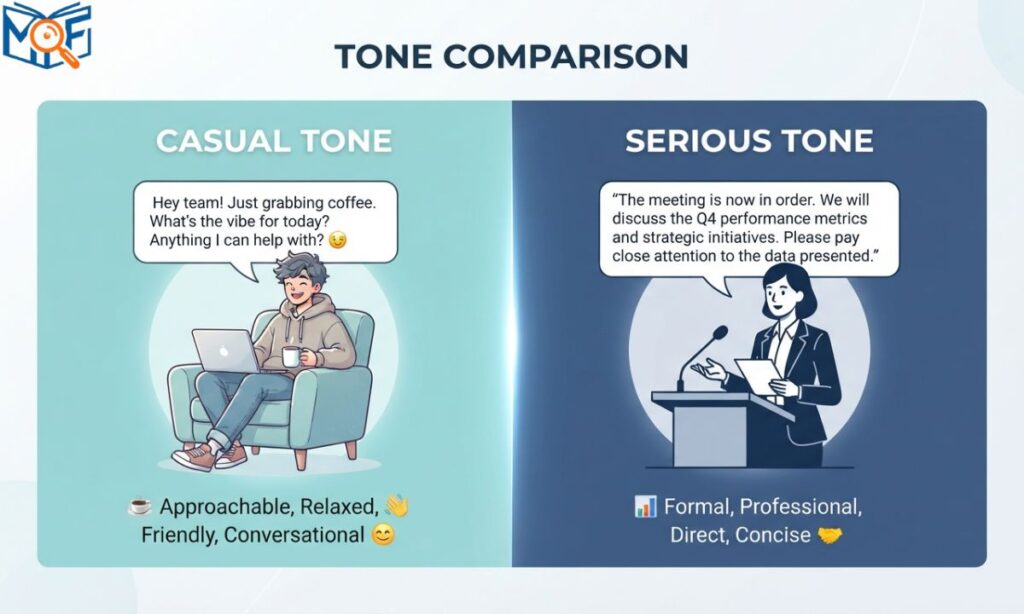
Serious TWs cover trauma, abuse, self-harm, and death. Name the topic clearly and don’t joke around it.
Casual
Some people use it lightly, like “tw: my cooking skills.” That’s fine among close friends. It shouldn’t be used for real sensitive topics.
When NOT to Use TW
TW is useful, but it can backfire in the wrong place.
In Formal Business Communication
Emails and reports need clear language. Use “content note” or “sensitive topic” instead.
As a Joke
Joking about TW on serious subjects can hurt people who rely on it. Save humor for harmless topics.
When the Meaning Isn’t Clear
If the recipient may confuse it with “toh” or “tomorrow,” write it out. “Trigger warning: violence” leaves no doubt.
With People Unfamiliar with Internet Slang
Parents, older relatives, and new users may not know it. Spell it out.
In Serious Discussions Without Context
A bare “TW” tells nobody anything. Always name the topic.
Common Misunderstandings
Mistaking Every TW for “Trigger Warning”
Not every TW is a warning. Check the surrounding words before deciding.
Assuming It Means the Same Everywhere
Depending on the community, TW can also mean “trans woman” or “Twitter.” Context decides.
Confusing TW with Other Warnings
NSFW flags adult content. A spoiler alert flags plot reveals. TW flags emotional triggers.
Thinking TW Is Only for Mental Health Topics
It also covers blood, flashing lights, and loud sounds. Physical and sensory triggers count too.
Taking It Literally Every Time
Sometimes it’s a joke, a typo, or Roman Urdu “toh.” Read the full message.
Comparison Table
| Term | Full form | Purpose | Example |
| TW | Trigger warning | Flags content that may cause distress | “TW: abuse” |
| CW | Content warning | Flags sensitive or uncomfortable content | “CW: blood” |
| NSFW | Not safe for work | Flags adult or explicit content | “NSFW” |
| Spoiler | Spoiler alert | Flags plot reveals | “Spoiler: ending” |
| tw (Roman Urdu) | Toh | Means “then” or “so” | “Tw chalo” |
Key Insight
Many creators now use CW as the broad label and keep TW for the most intense topics. In everyday chat, though, people use them interchangeably.
Variations and Types of TW
TW: Trigger Warning
The general label for content that may upset readers.
TW: Blood or Injury
Used for wounds, surgery clips, and accident photos.
TW: Violence
Covers fights, war footage, and shootings.
TW: Tomorrow
Rare. Some texters shorten “tomorrow” this way, but “tmrw” is far more common.
TW: Mental Health
Covers anxiety, depression, self-harm, and suicide. Posts on these topics should ideally point to support resources.
TW: Abuse
Covers domestic, emotional, and child abuse, plus harassment.
TW: Flashing Lights
Warns people with photosensitive epilepsy, since flashing visuals can cause seizures.
TW: Death or Grief
Used for funerals, loss, and memorial posts.
TW: Loud Sounds
Helps people with noise sensitivity or startle responses.
TW: Eating Disorders
Flags talk about food, weight, or dieting. It’s often written “TW: ED.”
How to Respond When Someone Uses TW
Casual Replies
- “Thanks for the heads-up.”
- “Noted, I’ll skip this one.”
Funny Replies
Only use these when the TW itself is a joke. If someone writes “tw: my cooking,” try “Warning accepted. Sending snacks.” Never joke about serious topics.
Respectful Replies
- “Thank you for warning us.”
- “Take care of yourself while sharing this.”
Mature Replies
- “I appreciate the note. I’ll read it when I’m ready.”
- “If you want to talk, I’m here.”
Regional & Cultural Usage
Western Culture
TW is widely understood. It’s common on X, Tumblr, TikTok, and in fandom spaces.
Global Internet Usage
English TW travels across borders, but local languages often add their own words for warnings. Many users mix both.
Gen Z vs. Millennials
Gen Z uses TW constantly in captions and comments. Many millennials know it too, but often write “content warning” in full.
Asian Culture
Usage varies widely by country and language. In many places, TW is understood mainly by younger, English-fluent users. Some creators use local-language warnings or emojis instead.
Middle Eastern Culture
Bilingual young users often use English TW on social media. Others prefer Arabic or Urdu phrases, especially in family or community groups.
Is TW Safe for Kids?
The term itself is harmless. The content after it may not be. A TW is not an age rating, so it won’t stop a child from seeing the material.
Parents can:
- Explain what TW means in simple words.
- Tell kids to skip posts with a TW unless a trusted adult is nearby.
- Use app safety settings and content filters.
- Encourage kids to talk about anything that upset them.
FAQs
What does TW mean in chat?
TW means trigger warning. It warns people about upsetting content.
What does TW mean on Instagram?
It signals sensitive content in a post or DM. Creators add it so viewers can skip.
What is the TW meaning on Snapchat?
It means trigger warning. Users add it to snaps and captions.
What does TW mean on TikTok?
It warns viewers about heavy topics in a video. It usually appears in the caption or first frame.
Does TW always mean Trigger Warning?
No. It can also mean “toh,” trans woman, or Twitter. Context tells you which.
What is the TW meaning in Urdu?
It means ٹرگر وارننگ, a warning before sensitive content. In Roman Urdu, “tw” can also mean “toh.”
Is TW a Gen Z slang term?
Gen Z uses it often, but it isn’t only theirs. It began in online forums and blogs.
What does TW mean in a text message?
It usually means trigger warning. It flags upsetting content before you read on.
What does TW mean before a post?
It warns you the post has sensitive topics. You can skip it or read when ready.
Is TW a bad word?
No. TW is not rude or offensive. It’s a polite heads-up.
Conclusion
TW meaning in chat is simple once you know the context. It usually stands for trigger warning. It gives people a moment to prepare or skip. Sometimes it means “toh,” Twitter, or something else. Always read the full message first.
Use TW with care and name the topic clearly. Skip it in formal writing, and never use it as a joke on serious topics. When someone shares a TW, reply kindly. Want to decode more slang? Explore more meanings on our website.

John Julian is the founder and head wordsmith at MeaningFacts.com, a dedicated digital resource for word origins, definitions, and cultural linguistics. With over 5 years of experience as a lexicographer and content researcher, John Julian specializes in breaking down complex etymologies into accessible, engaging stories.