

Ever seen someone reply “cap” to a text and had no idea what it meant? You’re not alone. This one small word has taken over group chats, comment sections, and TikTok captions everywhere. If you’ve been left scratching your head, this guide breaks down exactly what cap slang meaning is, where it came from, and how to use it the right way — no cap.
By the end of this article, you’ll be able to spot a “cap” the second you see it, and respond like you’ve been speaking the language for years.
Meaning & Definition of Cap Slang 🧢
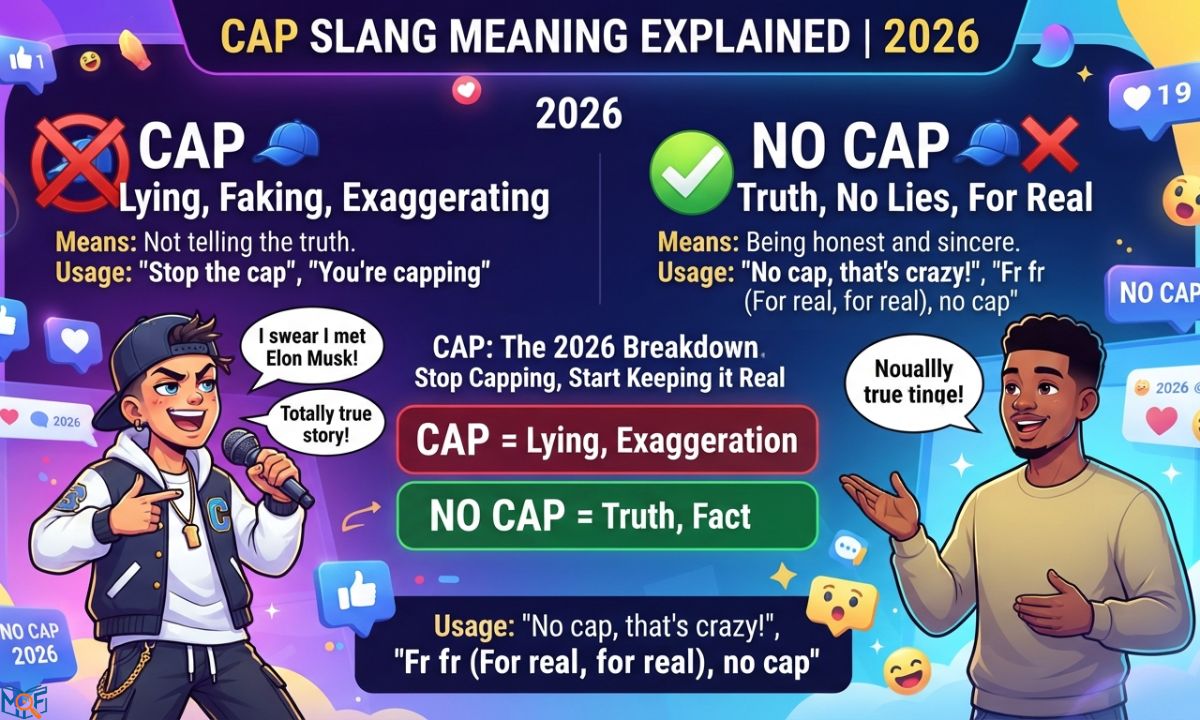
In slang, “cap” means a lie, exaggeration, or something that isn’t true. If someone says “that’s cap,” they’re calling out a statement as false. It’s the internet-era version of saying “that’s a lie” or “stop exaggerating.”
Quick Answer Box:
| Term | Meaning |
| Cap | A lie or exaggeration |
| No cap | Not lying / for real |
| Capping | The act of lying or bragging |
| Capper | Someone who lies or exaggerates often |
So when a friend brags about running a marathon in two hours, you might text back a single word: “cap.” Short, blunt, and instantly understood by anyone under 30.
Secondary meanings
“Cap” doesn’t always mean lying. Depending on context, it can also mean:
- Bragging or exaggerating — talking yourself up more than reality supports
- A limit or ceiling — the older, non-slang use, like a salary cap or spending cap
- A literal hat — the original, everyday meaning of the word
Context is everything here. If someone’s talking about a video game’s loot system, “cap” probably means a limit. If they’re reacting to a wild story, it almost always means lie.
Background & Origin of Cap Slang 📜
The cap slang meaning feels brand new, but the roots go back much further than most people expect.
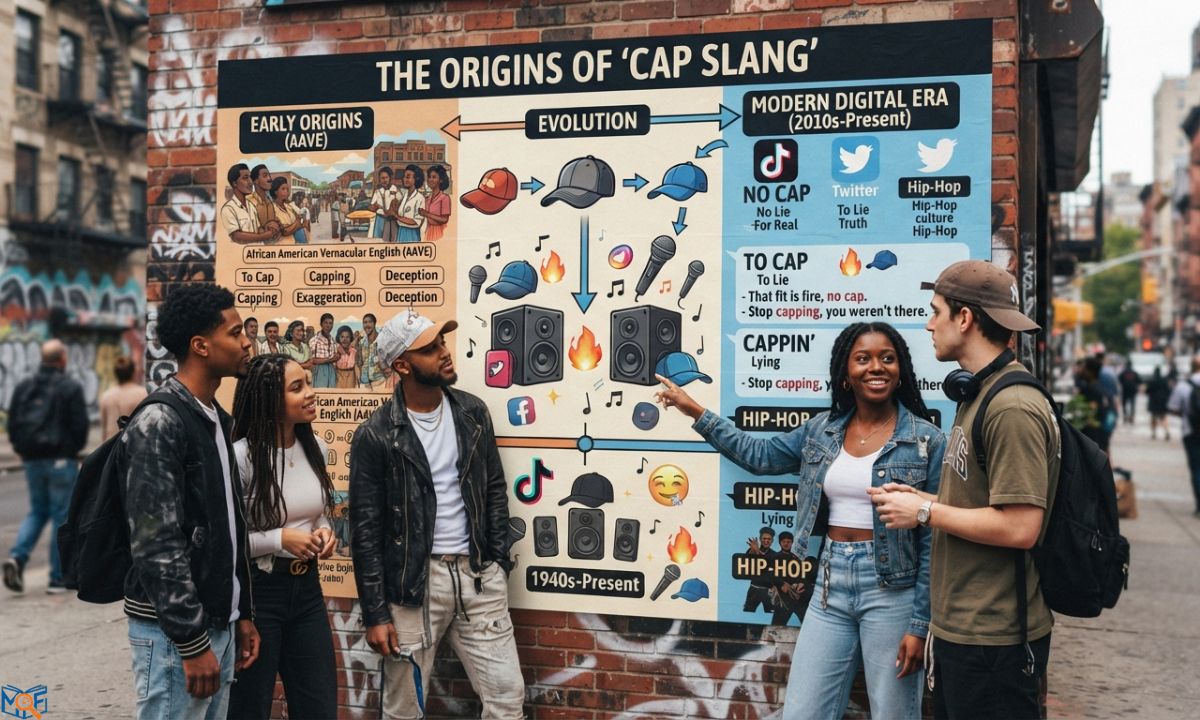
- 1500s–1800s: Early English slang used “cap” in verbal contests, where speakers would “cap” each other’s jokes or stories by topping them.
- 1940s: Within Black American communities, “capping” became linked to the tradition of “the dozens,” a game of exaggerated, competitive insults. This is where the exaggeration and boasting sense really took hold.
- 2010s: Southern hip-hop artists, especially from Atlanta, brought “cap” and “no cap” into mainstream music lyrics, helping the phrase spread far beyond its original communities.
- Late 2010s–2020s: Social media, gaming, and celebrity use pushed “no cap” into everyday teen and Gen Z vocabulary worldwide.
A popular myth claims “no cap” refers to gold teeth — a solid gold tooth versus a gold “cap” over a regular one. Language researchers generally consider this a folk story rather than the real origin, since the exaggeration meaning of “cap” predates that comparison by decades.
The bottom line: cap slang meaning is rooted in African American Vernacular English (AAVE), and understanding that history is part of using the term respectfully.
Usage in Different Contexts 💬
“Cap” changes slightly depending on where and how it’s used. Here’s what it looks like in real life.
Chat conversations
In texts, “cap” is usually a quick callout.
- “You said you’d be here at 6.” → “That’s cap, I said 7.”
- “No cap, this is the best burger I’ve had all year.”
Social media posts
On platforms like X or Instagram, people use “cap” to challenge claims in captions, comments, or replies. A viral post claiming a celebrity did something outrageous will almost always get a few “cap” comments underneath if it seems fake.
Arguments or debates
During disagreements, “cap” gets used to shut down a point quickly. It’s blunt by design — a one-word way of saying “I don’t believe you” without writing a paragraph.
Friendly teasing
Not every “cap” is serious. Friends often use it playfully:
- “I could beat you in a race.” → “Cap. You lost last time.”
This teasing use keeps the word light and social rather than confrontational.
Meanings Across Platforms 📱
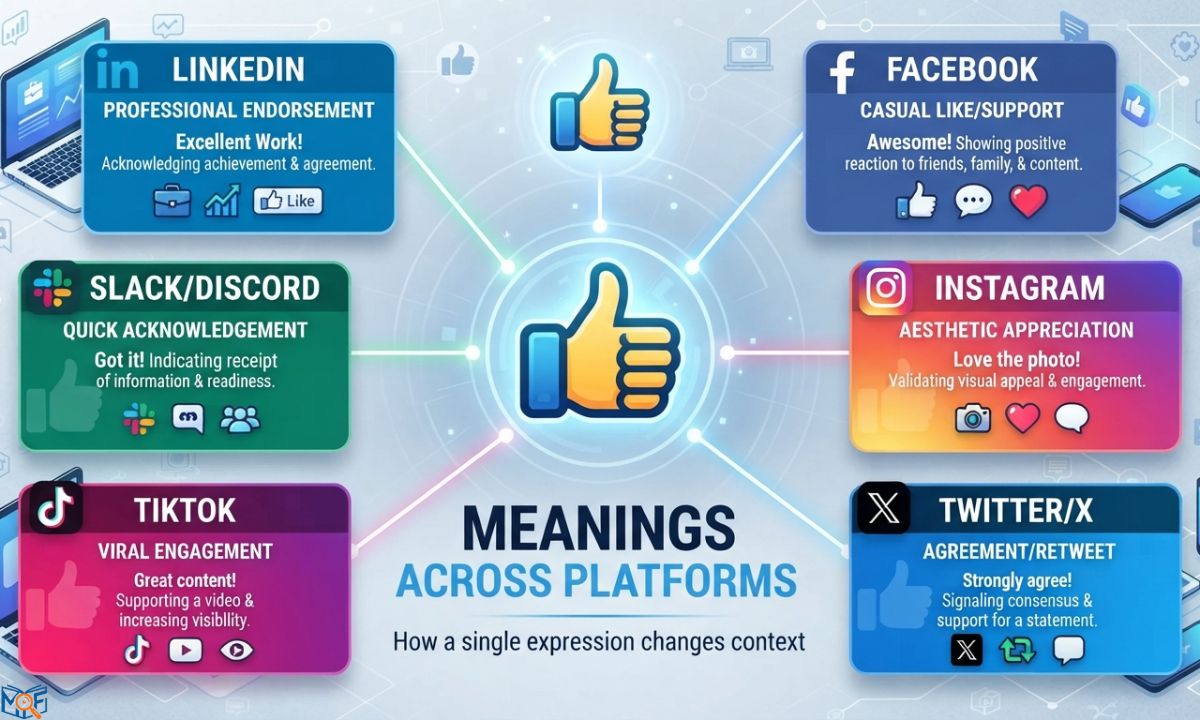
The cap slang meaning stays mostly consistent across apps, but the tone and frequency shift depending on the platform’s culture.
| Platform | Common Usage |
| Used in group chats to call out exaggerated stories or jokes | |
| Common in comments under bold captions or flexing posts | |
| TikTok | Used in comments and duets to fact-check viral claims |
| Snapchat | Used in quick replies to Snaps or stories that seem exaggerated |
Because WhatsApp is often used among close friends and family, “cap” tends to appear in a lighter, joking tone rather than as a serious accusation.
On Instagram, “cap” frequently shows up under posts where someone claims a big achievement, a designer item, or an unbelievable life update.
TikTok
TikTok comment sections are full of “cap” call-outs, especially on storytime videos, prank content, or “get ready with me” videos making bold claims.
Snapchat
Snapchat’s fast, casual format makes “cap” a natural one-word reply to a Snap that looks staged or exaggerated.
Similar Terms & Alternatives 🔄
If you’re learning the cap slang meaning, these related terms will come up often too.
| Term | Meaning |
| No cap | Telling the truth, being serious |
| Cap city | A place or situation full of lies |
| Deadass | Being completely serious (similar to “no cap”) |
| Facts | Agreeing that something is true |
| Sus | Something suspicious or questionable |
| Big cap | An obvious, exaggerated lie |
These words often show up together in the same sentence, like: “Nah deadass, that’s cap, sus behavior fr.”
Relevance in Online Conversations & Dating Apps ❤️
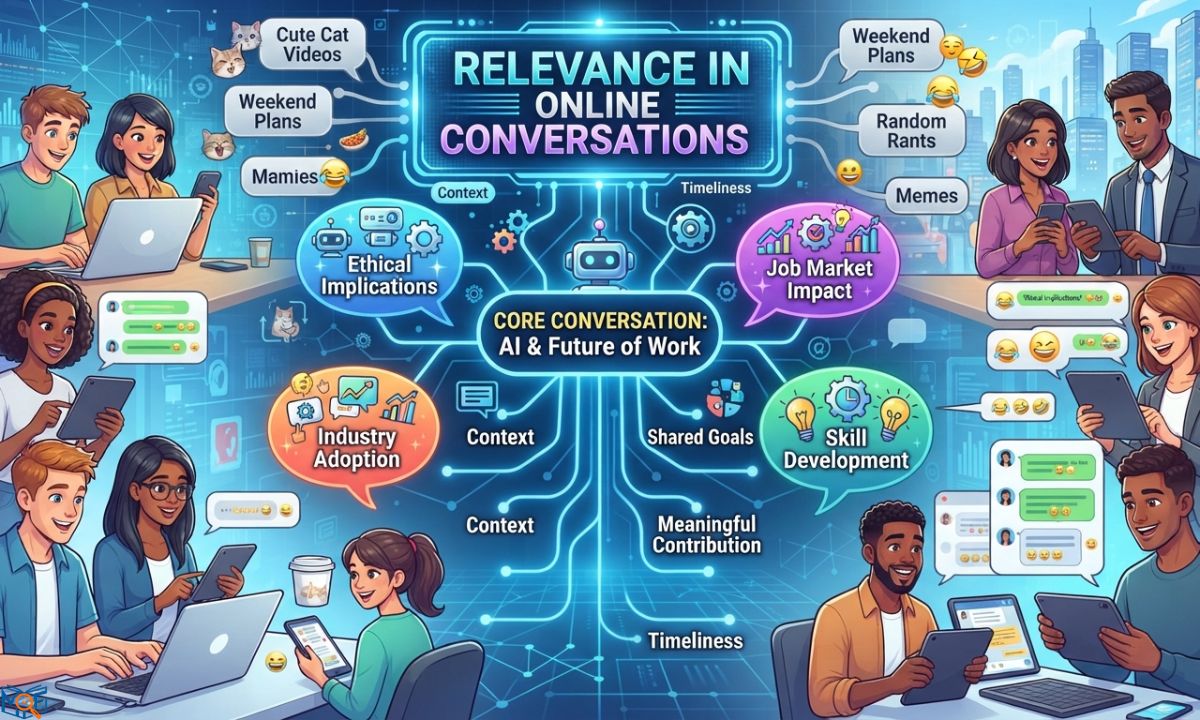
On dating apps, “cap” plays a surprisingly big role. Bios and opening messages get called out constantly.
- A match claims to be “6’2 with a Lambo” → friends might joke, “that profile is cap.”
- Someone says they never lie in relationships → a playful reply might be “no cap or all cap?”
It’s become a quick way to signal trust — or the lack of it — in early conversations. Saying “no cap” in a bio or message is also a small way people try to show they’re being upfront and genuine, which matters a lot in a space full of exaggerated profiles.
How to Respond to “Cap” in Chat 💬
Getting called “cap” doesn’t have to be awkward. Here’s how people typically respond:
- Deny it: “No cap, I swear.”
- Double down playfully: “Cap or not, it happened.”
- Laugh it off: “Okay fine, maybe a little cap 😂”
- Provide proof: “Here’s the receipt, no cap.”
Examples:
Them: “I ran 10 miles this morning.” You: “Cap.” Them: “No cap, check my watch.”
Them: “This is the cheapest flight you’ll find.” You: “No cap? Let me check.”
Differences From Similar Words ⚖️
People often mix up “cap” with other slang that sounds similar in meaning but isn’t quite the same.
| Word | Meaning | Different From “Cap” Because… |
| Lie | A false statement | “Lie” is neutral English; “cap” is slang-specific |
| Sus | Suspicious, questionable | Sus means something seems off, not confirmed false |
| Fake | Not genuine or authentic | Fake describes an object or person, not usually a statement |
| Shade | An indirect insult | Shade is about tone, not truthfulness |
Knowing these differences helps you use “cap” correctly instead of swapping it in for words that mean something slightly different.
Cap slang meaning urban dictionary
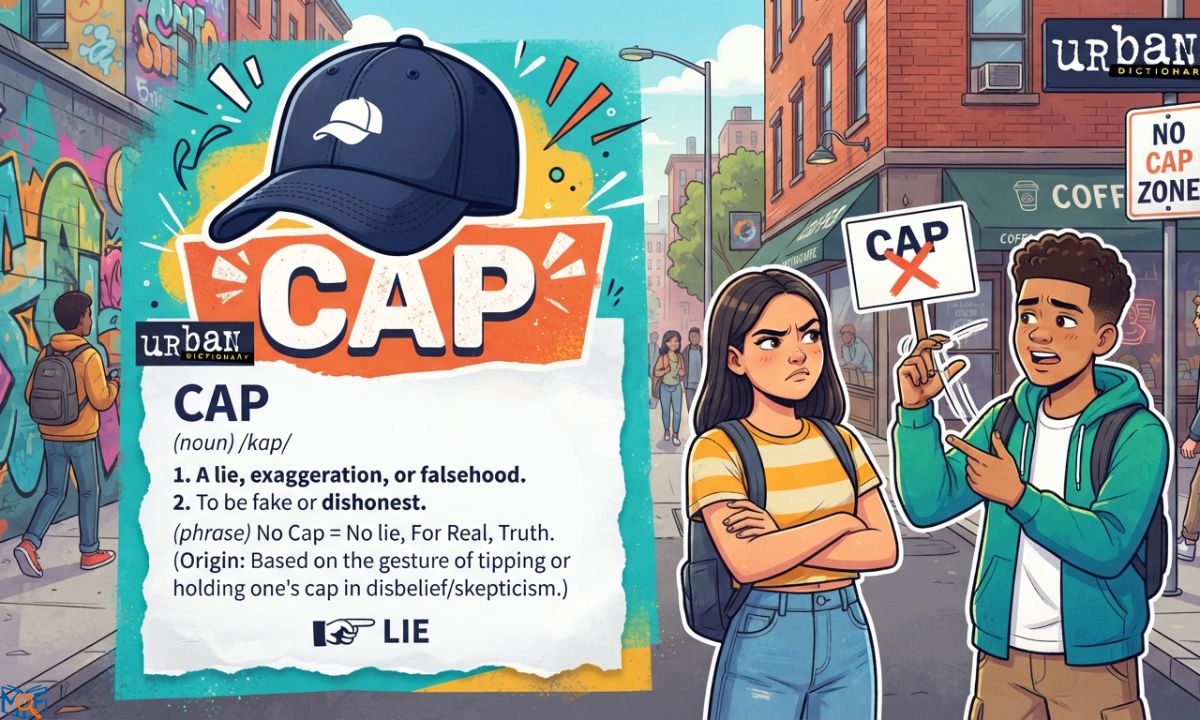
On crowdsourced slang sites, the top-voted definitions of “cap” line up closely with mainstream usage: a lie, an exaggeration, or a false claim. “No cap” is consistently defined as the opposite — a phrase used to stress that something is true.
User-submitted examples on these sites often highlight the word’s flexibility, showing it used as a noun (“that’s cap”), a verb (“stop capping”), and a full phrase (“no cap”). This consistency across informal, user-driven definitions is part of why the slang has held steady in meaning even as it’s spread to new audiences.
Other Fields & Technical Meanings ⚙️
Outside of slang, “cap” has completely different meanings depending on the field:
- Finance: Market cap refers to a company’s total value on the stock market.
- Sports: A salary cap limits how much a team can spend on player contracts.
- Fashion: A cap is simply a type of hat.
- Insurance: A coverage cap is the maximum amount a policy will pay out.
- Gaming: A level cap or damage cap limits how far a stat can increase.
These technical meanings existed long before the slang version and remain completely separate in professional or formal writing.
Common Misconceptions & Mistakes ❌
A few mix-ups happen often with this term:
- Mistake: Thinking “cap” always means a hat in casual conversation. In slang contexts, it almost always means a lie instead.
- Mistake: Believing the gold-tooth origin story is confirmed fact. Most language researchers treat it as an unverified legend.
- Mistake: Using “cap” and “sus” interchangeably. “Sus” implies doubt; “cap” implies an outright lie.
- Mistake: Assuming “no cap” is brand new. Its roots trace back decades before it went viral online.
Avoiding these mix-ups helps you use the term accurately and avoid confusing older or newer audiences.
Popularity & Trends Over Time 📈
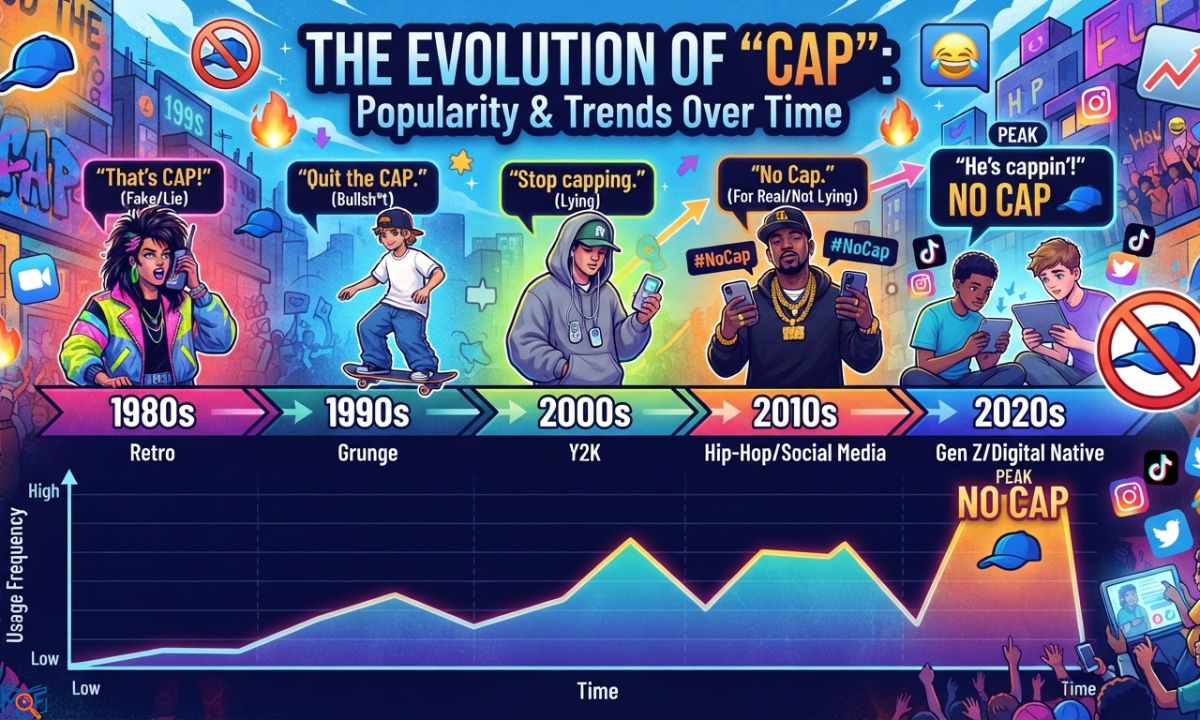
The cap slang meaning has grown from a regional expression into a global one.
- 2012 and earlier: Used mainly within Black American communities and early hip-hop lyrics.
- 2017–2019: Trap and rap artists brought “no cap” into mainstream music charts.
- 2020–2022: Celebrities and influencers helped push the phrase across social media platforms worldwide.
- 2023–2026: “Cap” remains a staple in everyday Gen Z and Gen Alpha vocabulary, appearing in memes, comments, and everyday speech.
Unlike many slang terms that fade within a year or two, “cap” has stayed relevant for over a decade, which suggests it’s settled into everyday informal English rather than being a passing trend.
FAQs
What does cap mean in slang?
Cap means a lie or exaggeration. If something is “cap,” it’s not true.
What does no cap mean?
No cap means someone is telling the truth. It’s used to stress honesty.
Is cap a bad word?
No, cap isn’t offensive. It’s casual slang, safe for everyday conversation.
Where did cap slang come from?
Cap comes from African American Vernacular English, popularized through hip-hop culture.
What does cap mean on social media?
Cap means something is false or exaggerated online.
How do you use no cap in a sentence?
Say “no cap” right after a statement to show you’re being honest.
Conclusion
So, the cap slang meaning really comes down to one simple idea: cap means a lie, and no cap means the truth. It’s a small word, but it carries decades of language history behind it. Once you know it, spotting it in chats and comments becomes second nature.
Slang like this keeps evolving every year, and staying current makes conversations easier and more fun. If this guide helped clear things up, stick around and explore more slang meanings on our site — no cap.

John Julian is the founder and head wordsmith at MeaningFacts.com, a dedicated digital resource for word origins, definitions, and cultural linguistics. With over 5 years of experience as a lexicographer and content researcher, John Julian specializes in breaking down complex etymologies into accessible, engaging stories.