
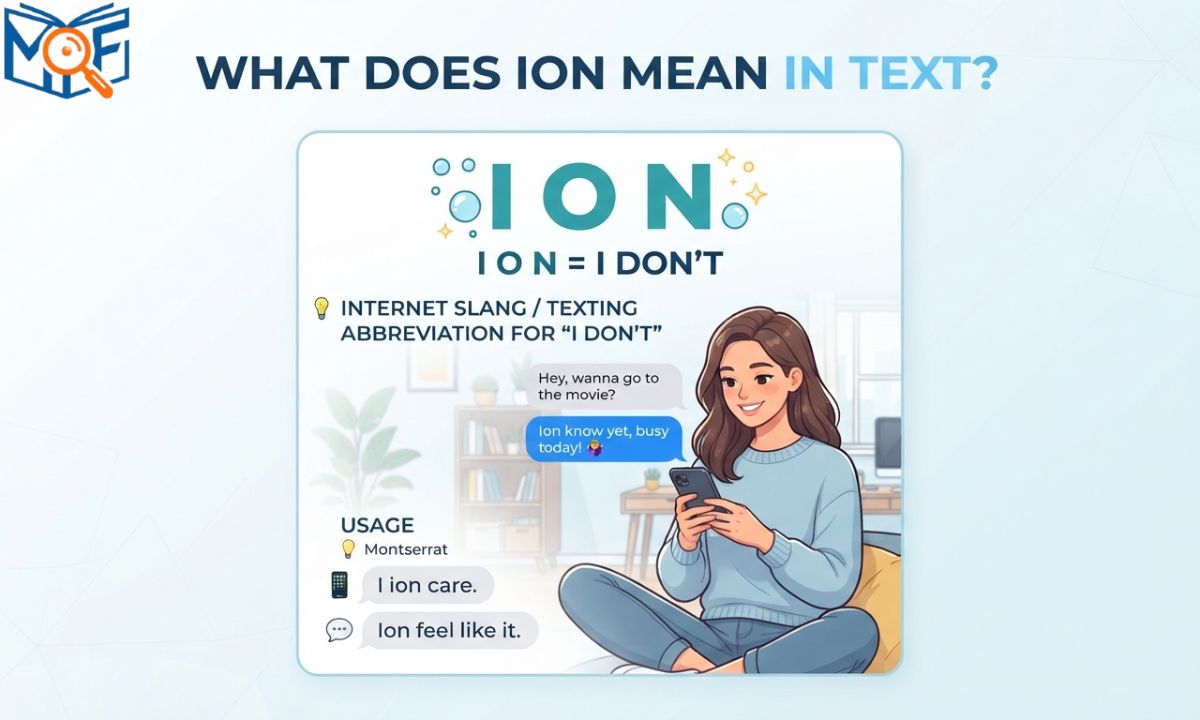

Seen “ION” pop up in a text and had no clue what it meant? You’re not alone. ION is one of the fastest-spreading texting abbreviations of the last few years, especially among Gen Z on TikTok, Instagram, and group chats.
In simple terms, ION means “I don’t.” It’s a quick, blended way of typing “I don’t” so fast that the words almost merge into one sound. Once you know this, half the confusing texts in your DMs will suddenly make sense.
This guide breaks down exactly what ION Mean in Text, where it’s used, real conversation examples, and when you should (or shouldn’t) use it yourself.
🧠 What Does ION Meaning in Text?
Quick answer: ION is texting slang for “I don’t.”
It comes from the way people naturally say “I don’t” out loud — fast and slurred together, almost like “eye-on.” Someone typing quickly turned that sound into the letters I-O-N, and it stuck.
You’ll usually see it at the start of a sentence, right where “I don’t” would normally go:
- “ion know” = “I don’t know”
- “ion care” = “I don’t care”
- “ion think so” = “I don’t think so”
It’s part of a bigger trend of sound-based texting shortcuts, similar to how “ngl” (not gonna lie) or “tbh” (to be honest) developed. If you’re wondering what ION Mean in Text, it’s not a random acronym — it’s a phonetic shortcut, meaning it’s built on how the phrase sounds, not on the first letters of separate words.
📱 Where Is ION Commonly Used?
ION shows up mostly in casual digital spaces where speed and tone matter more than grammar. Here’s where you’ll spot it most:
- Text messages between friends
- Instagram and Snapchat DMs
- TikTok comments and captions
- Twitter/X replies
- Group chats on WhatsApp and Discord
- Gaming chats, especially during fast back-and-forth conversation
It’s most common among teens and young adults, but ION Mean in Text has crossed over into wider internet culture, so you’ll now see older users picking it up too, especially in replies to trending TikTok slang.
💬 Examples of ION in Conversation
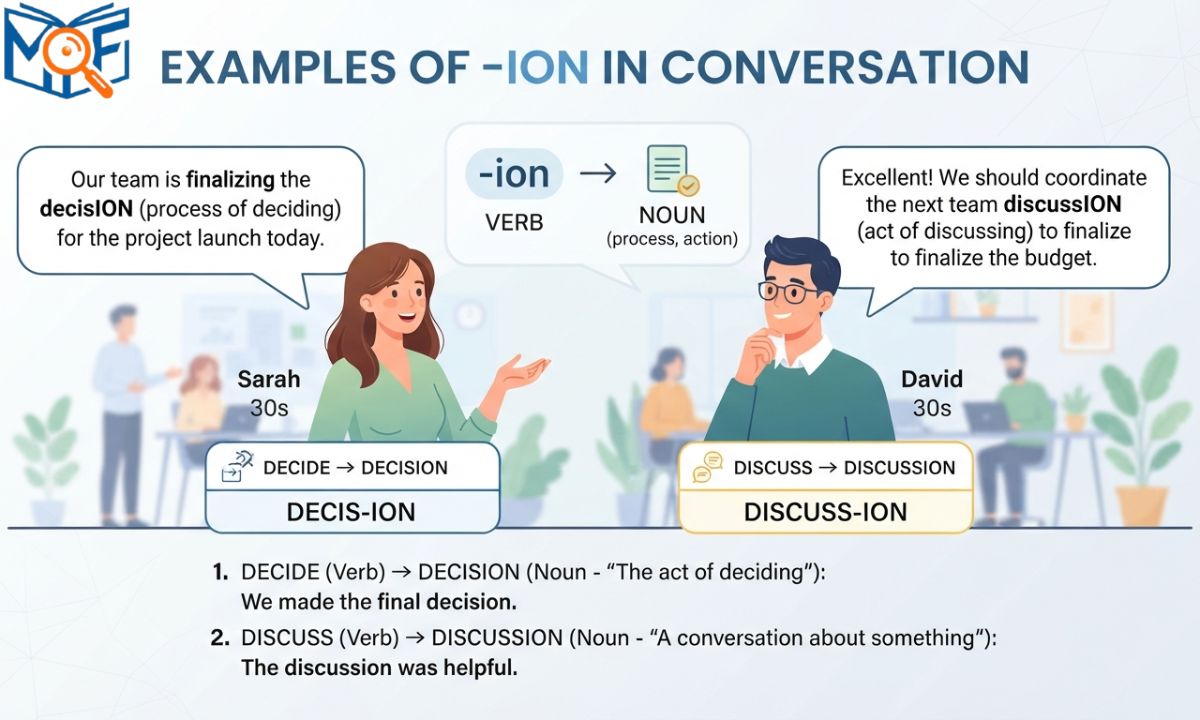
Seeing ION in real sentences makes the meaning click instantly. Here are some everyday examples:
- “ion know why he said that lol”
- “ion care what people think tbh”
- “ion think that’s a good idea”
- “ion feel like going out tonight”
- “ion trust that website ngl”
Notice how in every case, ION simply replaces “I don’t” and the sentence continues normally after it. That’s the whole trick — it’s a drop-in swap, not a new grammar rule.
🕓 When to Use and When Not to Use ION
Like most slang, ION fits some situations perfectly and completely misses the mark in others.
✅ When to Use ION
- Texting close friends or people your age
- Casual Instagram or TikTok comments
- Group chats with a relaxed tone
- Replying quickly to keep the conversation light
❌ When Not to Use ION
- Work emails or professional messages
- Texting teachers, professors, or bosses
- Formal writing, essays, or resumes
- Conversations with people unfamiliar with internet slang
If you’re unsure whether the person you’re texting will understand it, it’s safer to just type “I don’t” in full.
Meaning Across Platforms
ION carries the same core meaning everywhere, but the vibe shifts slightly depending on the app.
ION meaning in WhatsApp
On WhatsApp, ION is used the same way as texting — “I don’t.” Since WhatsApp chats often mix friends, family, and coworkers, it’s more common in one-on-one chats with peers than in family or work groups.
ION mean in text on Instagram
On Instagram, ION shows up heavily in comments and DMs, often paired with other slang like “ngl” or “fr fr.” It fits the fast, casual tone Instagram conversations tend to have.
ION meaning slang TikTok
TikTok is really where ION Mean in Text gained mainstream traction. It’s used constantly in comment sections — “ion think this trend is it” or “ion get why people hate this song” — usually to share a quick, honest opinion without sounding harsh.
ION Mean in Text From a Girl
Context matters more than gender here, but when a girl texts “ion,” it almost always means the same thing: “I don’t.” For more on this usage, ION Mean in Text is the same regardless of who’s sending it. What can shift is the emotional tone. For example:
- “ion know if I like him” → uncertainty about feelings
- “ion care anymore” → frustration or emotional distance
- “ion want to talk about it” → needing space
So while the definition stays the same, reading the rest of the sentence tells you the actual mood behind it.
📊 Context Comparison Table
| Phrase | Meaning | Common Tone |
| ion know | I don’t know | Unsure, casual |
| ion care | I don’t care | Indifferent, sometimes blunt |
| ion think so | I don’t think so | Disagreement |
| ion feel like it | I don’t feel like it | Low motivation, tired |
| ion trust that | I don’t trust that | Suspicious, cautious |
🔄 Similar Slang Words or Alternatives
ION belongs to a whole family of phonetic texting shortcuts. A few close relatives:
- Ian – often means “I am” in fast typing, though sometimes confused with the name
- Idc – “I don’t care”
- Idk – “I don’t know”
- Finna – “going to” or “about to”
- Tbh – “to be honest”
These all share the same goal: type less, say the same thing, keep the message moving fast.
FAQs
What does ION Mean in Text message?
ION means “I don’t” in texting. It’s a fast, casual way to shorten the phrase.
Is ion a real word?
No, ion isn’t a real word here. It’s internet slang for “I don’t.”
Does ION mean something scientific in texting?
No. In texting, ION has nothing to do with science. It simply means “I don’t.”
Is ION rude?
Not by itself. It can sound blunt depending on the sentence, but the abbreviation itself is neutral.
Can I use ION with everyone?
No, save it for casual chats. Avoid it in professional or formal conversations.
Conclusion
So next time someone texts “ion know” or “ion care,” you’ll know exactly what they mean. ION is simply a quick, casual way of typing “I don’t,” born from how the phrase naturally sounds when spoken fast. It’s harmless, easy to use, and now a regular part of texting culture.
Just remember to save it for the right audience — friends, DMs, and casual chats work great, while formal messages don’t. Curious about other confusing texting slang? Explore more slang meanings on our website and never get caught confused in a chat again.

John Julian is the founder and head wordsmith at MeaningFacts.com, a dedicated digital resource for word origins, definitions, and cultural linguistics. With over 5 years of experience as a lexicographer and content researcher, John Julian specializes in breaking down complex etymologies into accessible, engaging stories.