
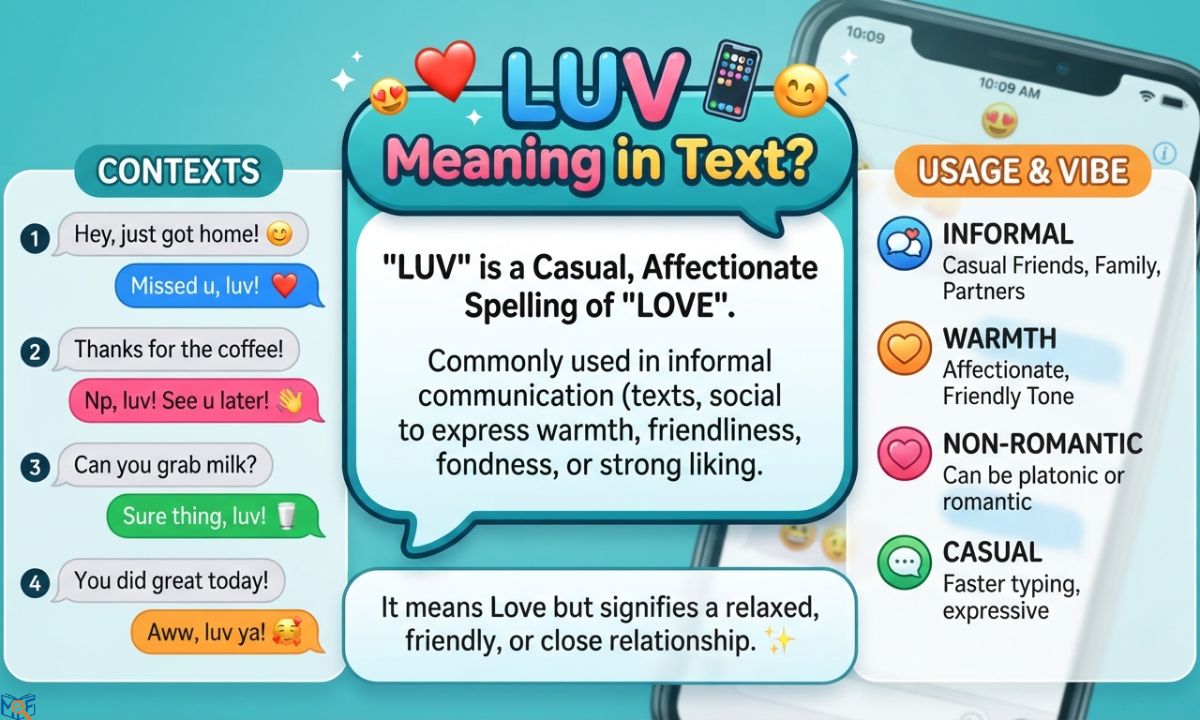

If someone just texted you “luv” and you’re not sure what to make of it, you’re not alone. The luv meaning in text is simple on the surface — it’s a shortened, casual spelling of “love” — but the way people actually use it can shift depending on who sent it, which app they used, and the tone of the conversation.
This guide breaks down every angle of Luv Meaning in Text: definition, origin, platform differences, and exactly how to respond.
Meaning & Definition of “Luv”
Primary Meaning
At its core, “luv” is an informal, phonetic shorthand for the word “love.” The Luv Meaning in Text reflects affection, warmth, or fondness toward a friend, partner, family member, or even a pet, without the weight that the full word “love” sometimes carries.
Quick answer: “Luv” means “love” — a casual, text-friendly way to show affection or closeness without sounding too serious.
Secondary Meanings
Beyond romance, “luv” shows up in a few other everyday contexts:
- A friendly sign-off between close friends (“talk soon, luv”)
- A term of endearment used by British and Irish speakers, similar to “dear” or “hon,” regardless of romantic interest
- A lighthearted way to express enthusiasm about something non-personal (“luv this song”)
Background & Origin of “Luv”
Linguistic Roots
“Luv” isn’t a new invention. The Luv Meaning in Text comes from a phonetic respelling of “love,” and phonetic spellings like this have existed in informal English writing for decades, long before texting existed — showing up in advertising, song titles, and casual notes.
Entry into Texting Culture
When SMS texting took off in the late 1990s and early 2000s, character limits and slow keypads pushed people toward shorter spellings.
Words like “luv,” “u,” and “gr8” became common because they were faster to type and still easy to understand.
Cultural Influence
British slang has long used “luv” as a casual term of address, and this usage blended with texting shorthand as digital communication spread globally.
Pop culture, music lyrics, and social media captions have kept the spelling alive, while Luv Meaning in Text adds a slightly playful, affectionate tone that “love” alone doesn’t always carry.
Meanings Across Platforms
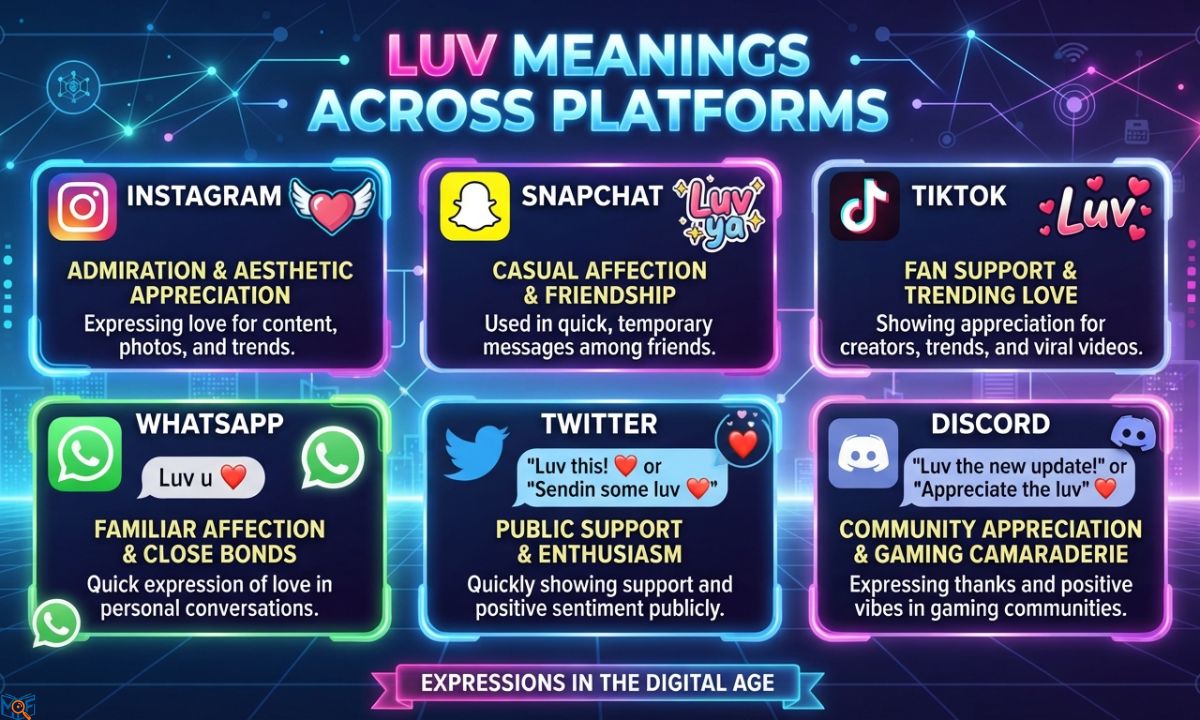
The core meaning of “luv” doesn’t change across apps, but the tone and intent often shift based on platform norms.
| Platform | Common Usage | Typical Tone |
| Sign-offs, pet names in personal chats | Warm, personal | |
| Comments, captions, DMs | Casual, public-facing | |
| TikTok | Comments on emotional or aesthetic content | Enthusiastic, expressive |
| Snapchat | Quick replies, streak captions | Playful, low-effort affection |
On WhatsApp, “luv” is often used in one-on-one chats between close friends, family, or partners. It’s frequently paired with emojis (❤️, 🥰) and used as a farewell, such as “night luv.”
On Instagram, “luv” appears a lot in comments and captions, often just expressing appreciation for a post rather than romantic feelings — think “luv this pic” under a friend’s photo.
TikTok
TikTok comment sections use “luv” to react to emotional, wholesome, or aesthetically pleasing videos. It’s usually more about enthusiasm than deep affection here.
Snapchat
Because Snapchat conversations are quick and disappearing, “luv” works as a low-effort, high-warmth word to end a snap or streak message.
Other Fields & Alternate Meanings
Common Misconceptions & Mistakes
- Mistake: Assuming “luv” always means romantic love. It often doesn’t — context matters more than the word itself.
- Mistake: Reading too much into a single “luv” from someone who uses it with everyone as a casual habit.
- Misconception: That “luv” is a new slang term. It’s actually been around in informal English for a long time.
Similar Terms & Alternatives
Words with a similar feel include “luvs,” “luvya” (love you), “ily” (I love you), and “xoxo.” Each carries a slightly different weight — “ily” tends to feel more direct and serious than a simple “luv.”
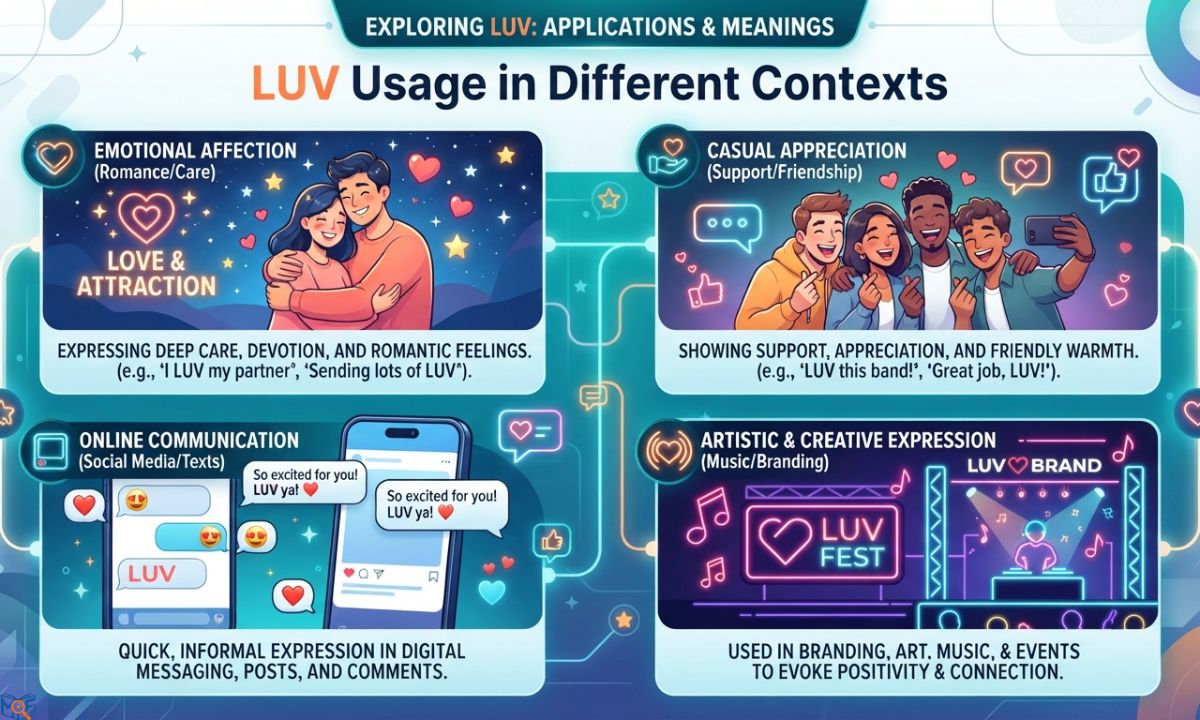
Usage in Different Contexts
Casual Chat
Between friends, “luv” is light and non-romantic — closer to “take care” or “you’re the best.”
Romantic Conversations
Between partners, “luv” often softens the intensity of “I love you” while still expressing genuine affection, especially early in a relationship.
Social Media
Publicly, “luv” tends to express appreciation for content, people, or moments rather than personal romantic feelings.
Professional or Semi-Formal
“Luv” is not appropriate in professional or semi-formal texting — understanding the Luv Meaning in Text shows why it reads as too casual and can come across as unprofessional or overly familiar.
How to Respond to “Luv”
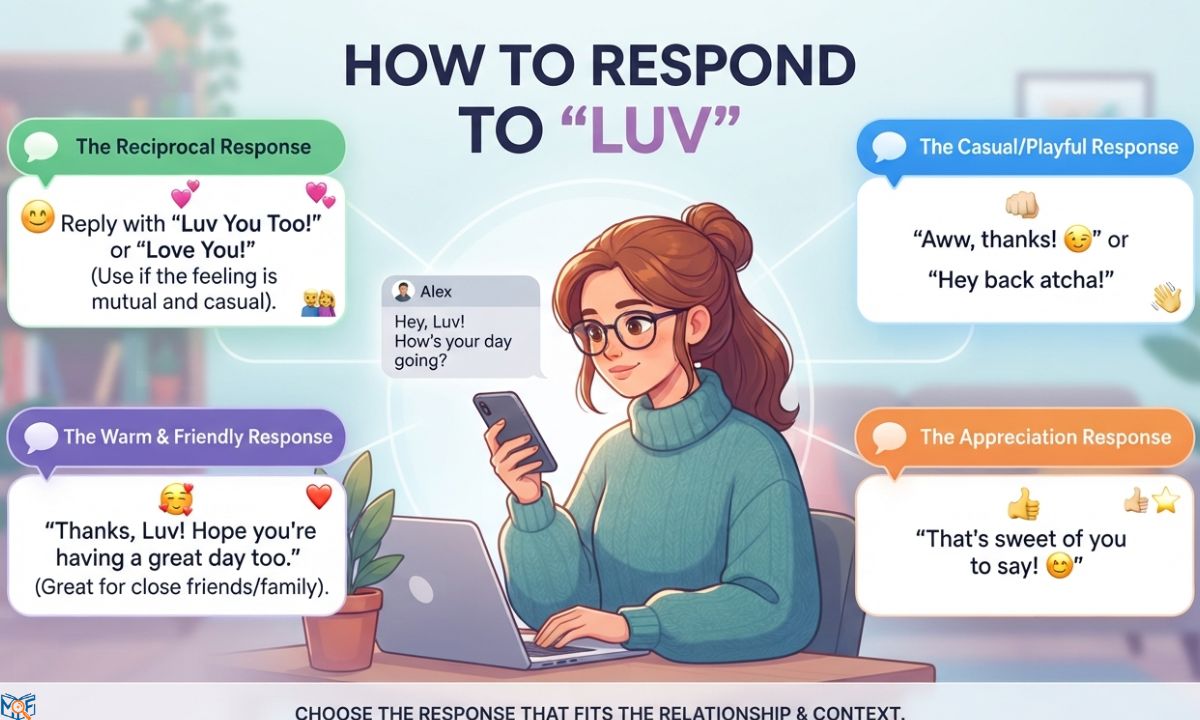
Quick answer: Match the tone it was sent in — a friendly “luv” gets a friendly reply, and a romantic one deserves a warmer response.
Friendly Replies
- “Luv you too, take care!”
- “Aw, you’re the best 💛”
Romantic Replies
- “Luv you more”
- “Missing you already, luv”
Neutral Replies
- “Thanks, luv!”
- A simple heart or smiley emoji works fine if you’re unsure how to respond in words.
Differences From Similar Words
| Term | Formality | Typical Use |
| Luv | Very casual | Friends, partners, comments |
| Love | Neutral to formal | Any relationship, serious tone |
| Ily | Casual | Quick “I love you” |
| Xoxo | Casual | Sign-off, affectionate closer |
The main difference is intensity and formality. “Love” is universally understood and safe in any context, while “luv” is playful and situational—understanding the Luv Meaning in Text shows why it’s great for texting, but not for formal writing or professional messages.
Relevance in Online Conversations & Dating Apps
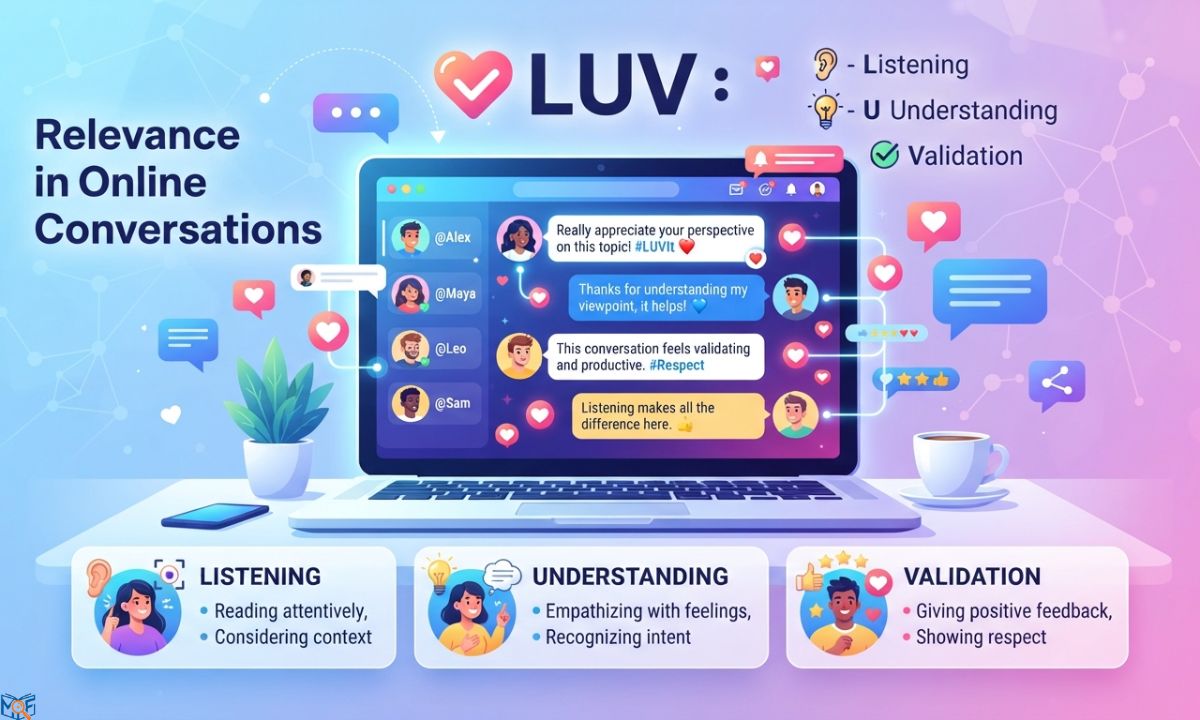
On dating apps, “Luv Meaning in Text” is commonly used early in conversations as a light, low-pressure way to show interest without jumping straight to “I love you.”
It signals warmth and flirtation without the seriousness that “love” can imply, making it a popular choice in the early stages of digital dating.
Popularity & Trends Over Time
“Luv” has remained consistently popular in texting culture for over two decades, and understanding the Luv Meaning in Text shows why it continues to appear in song titles, viral trends, and dating app conversations.
Its casual, flexible nature means it hasn’t faded the way some older texting slang has.
FAQs
What does luv mean in a text?
“Luv” is a casual, shortened spelling of “love,” used to show affection or friendliness in a text.
Is luv the same as love?
Yes, “luv” means the same thing as “love,” just written in a more relaxed, informal way.
Why do people write luv instead of love?
People use “luv” because it feels lighter, faster to type, and less intense than writing “love.”
Does luv mean someone likes you romantically?
Not always — “luv” is often used platonically with friends, so context matters more than the word.
How do you reply to luv in a text?
You can reply with “luv you too,” a friendly emoji, or match the same casual tone they used.
Conclusion
So, the luv meaning in text really comes down to context. It’s a warm, casual way to say “love,” used with friends, partners, and even strangers online. The tone behind it matters more than the word itself.
Whether you got a “luv” from a friend or a crush, now you know how to read it and reply with confidence. Explore more text slang meanings on our website to stay fluent in how people actually talk online today.

John Julian is the founder and head wordsmith at MeaningFacts.com, a dedicated digital resource for word origins, definitions, and cultural linguistics. With over 5 years of experience as a lexicographer and content researcher, John Julian specializes in breaking down complex etymologies into accessible, engaging stories.