


TMI stands for “Too Much Information.” It’s used when someone shares details that are overly personal, awkward, or more than the listener wanted to know. You’ll see it in texts, group chats, comments, and social media replies whenever a conversation crosses into oversharing territory.
TMI isn’t just an internet fad. It has become a shorthand for setting emotional boundaries in casual conversation, letting people react honestly without sounding harsh. Below, we’ll break down where it came from, how it’s used across different platforms, and when it’s okay (or not okay) to say it.
TMI Meaning in Text vs. Real Life Conversations
Texting and speaking out loud aren’t quite the same when it comes to TMI. In text, the word carries less weight because there’s no tone of voice or facial expression attached to it.
| Aspect | TMI in Text | TMI in Real Life |
| Tone | Playful, quick, often with emojis | Can feel more direct or blunt |
| Delivery | Typed reaction, easy to soften | Spoken instantly, harder to take back |
| Common use | Group chats, DMs, comments | Face-to-face chats, phone calls |
| Perceived intensity | Lighter, casual | Can feel more personal or awkward |
In texting, people often pair TMI with emojis like 😅 or 🙈 to keep things lighthearted. In person, the same word without a smile can come across as a sharper rejection of the topic.
The Origin of TMI: Where Did It Come From? 📜
The phrase “too much information” dates back to everyday spoken English, but it gained real traction as an abbreviation in the 1990s. As online forums, instant messaging, and early chat rooms grew, users needed a fast way to react to oversharing without typing a full sentence.
By the early 2000s, TMI had become a fixture of internet slang, showing up in emails, AOL Instant Messenger chats, and message boards. Texting culture on mobile phones cemented it as a go-to abbreviation, and social media platforms later carried it into comments, captions, and stories.
Today, TMI sits alongside terms like LOL and BRB as one of the internet’s longest-lasting shorthand expressions.
How TMI Is Commonly Used in Text Messages 📲
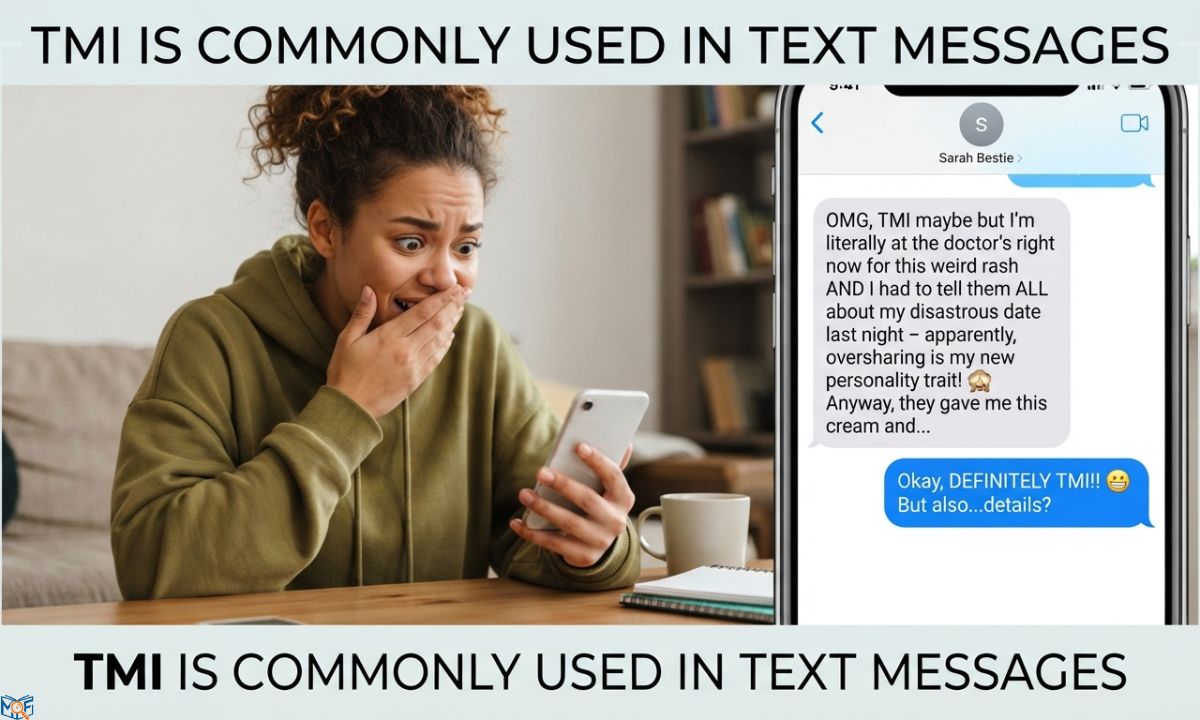
TMI shows up in a few distinct ways depending on the mood of the conversation.
Playful Reaction
Often used as a joke between close friends who overshare on purpose. Example: “I haven’t showered in two days lol” → “TMI 😂”
Light Discomfort
Used when a detail is a bit too personal but not offensive. It signals mild awkwardness rather than genuine upset.
Setting a Boundary
Sometimes TMI is a gentle way to say “please stop sharing that.” It works as a polite boundary without needing a longer explanation.
TMI Slang Meaning in Different Contexts
TMI doesn’t always mean the exact same thing everywhere it’s used. Context changes its weight and intent.
| Context | What TMI Usually Signals |
| Between friends | Playful teasing about oversharing |
| Family chats | Mild embarrassment or discomfort |
| Workplace messages | A polite way to redirect the topic |
| Social media comments | Public reaction to a personal post |
| Dating conversations | A signal to slow down or change topics |
Is TMI Rude or Harmless? 🤷
Quick answer: TMI is usually harmless when used casually between friends, but it can feel dismissive if said in a serious or emotional moment.
Most of the time, TMI is a light, joking response. It’s not meant to insult the other person, just to react honestly to something unexpected. Problems arise when TMI is used to shut down someone who’s actually trying to share something meaningful, like a health concern or personal struggle. In those cases, it can come across as careless or unkind, even if that wasn’t the intention.
The safest rule: use TMI for lighthearted oversharing, and choose a more thoughtful response when the topic is genuinely serious.
Examples of TMI in Text Messages 📝

Here are a few real-world style examples showing how TMI fits naturally into conversations:
- “My stomach has been so loud all day, everyone in the office can hear it.” → “TMI but also same 😂”
- “I cried during a dog food commercial last night.” → “Okay that’s a bit TMI but also relatable”
- “Can we not talk about my ex’s bathroom habits? TMI.”
- “She told the whole group chat about her doctor’s appointment… TMI, honestly.”
Notice how TMI almost always pairs with a casual, conversational tone rather than a formal one.
TMI vs. Oversharing: Are They the Same?
They’re related but not identical. Oversharing is the behavior of giving out too much personal information. TMI is the reaction someone gives when that oversharing happens.
| Term | What It Means |
| Oversharing | The act of revealing more than necessary |
| TMI | The response used to call out oversharing |
In short, oversharing is the cause, and TMI is often the effect.
When Should You Avoid Using TMI? 🚫
There are moments when saying TMI isn’t the right move, even if it feels natural:
- When someone is sharing a health issue or medical concern
- During a serious emotional conversation, like grief or stress
- In professional settings where the topic actually needs addressing
- When the person seems to genuinely need support, not a joke
In these situations, a more empathetic response goes further than a quick abbreviation.
How to Respond If Someone Says “TMI” to You
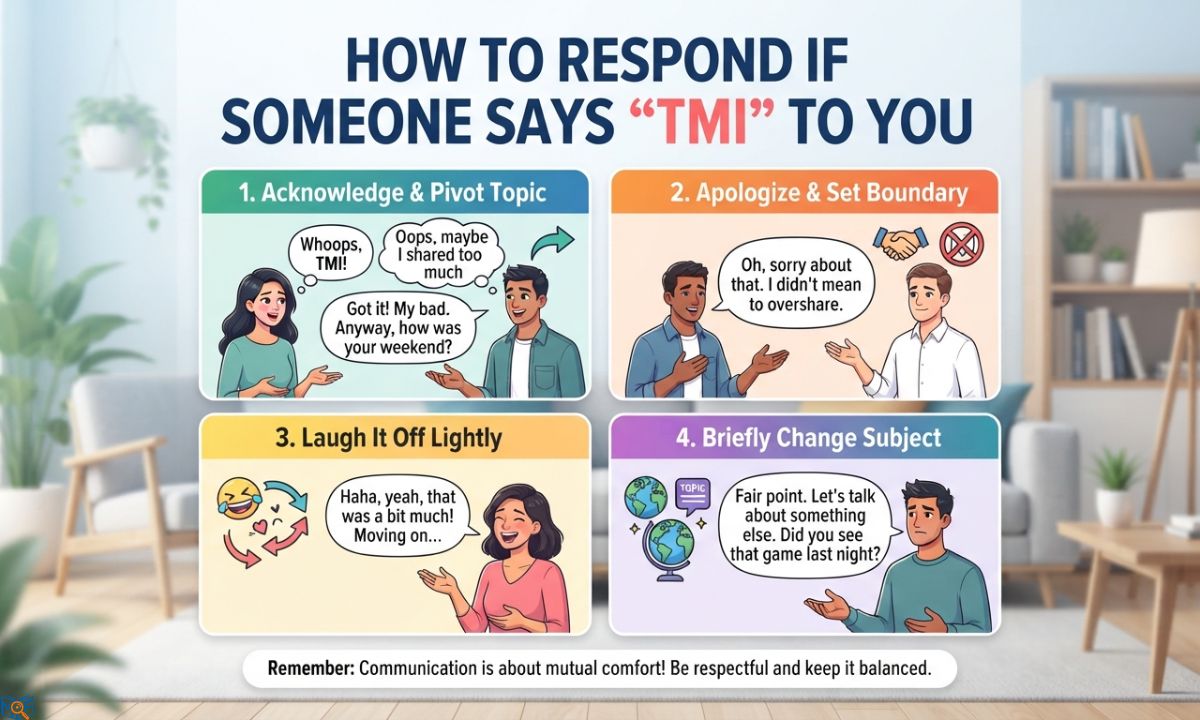
Getting a “TMI” reply can feel a little embarrassing, but it’s rarely meant as a serious criticism. A simple, light response works best.
- Laugh it off: “Haha fair, ignore that 😅”
- Change the subject naturally
- Apologize briefly if the topic was genuinely too personal
- Clarify if it was actually something important, not just oversharing
Reading the tone of the conversation helps you decide whether to joke back or explain further.
TMI Meaning Medical
Quick answer: In a medical context, TMI Meaning in Text usually refers to sharing symptoms or bodily details that feel uncomfortably personal, even though doctors and nurses hear them regularly.
Patients often say “TMI, but…” before describing a symptom, acknowledging that the detail might feel awkward to share. In healthcare settings, oversharing is actually encouraged, since accurate details help with diagnosis, even if they feel embarrassing to say out loud.
TMI Meaning in Social Media
On social platforms, TMI usually appears in comments or captions reacting to a post that reveals something unexpectedly personal, like a relationship detail, a body update, or a private life event shared publicly.
TMI Too Much Information Meaning from a Girl
When used by a girl in texting, TMI typically carries the same casual meaning as anywhere else: a friendly nudge that a shared detail was a bit much. It’s rarely meant to be harsh and is often followed by a laughing emoji or a joke.
What Does TMI Mean on Snapchat
On Snapchat, TMI is used the same way as in texting, usually in chat replies or Snap captions, reacting to a personal detail shared through a photo, video, or caption.
What Does TMI Mean on Instagram
On Instagram, TMI often shows up in comments under personal posts, Reels, or Stories, especially when someone shares health updates, relationship news, or candid personal moments.
TMI for Today Meaning
“TMI for today” is a playful way of saying someone has already shared enough personal information for one day. It’s often used humorously to wrap up an oversharing moment.
TMI Meaning in Kpop
In Kpop fan communities, TMI is used when idols or trainees share small personal facts, habits, or quirky details during interviews, lives, or fan interactions. Fans use it affectionately to describe these candid moments.
What Does TMI Mean on TikTok
On TikTok, TMI often appears in captions or comments under videos where creators share personal stories, habits, or details that feel more intimate than a typical post.
TMI in Social Media & Online Culture 🌐

Across platforms, TMI has evolved from a simple reaction into a cultural marker. It reflects how comfortable online spaces have become with personal sharing, while still acknowledging that some details cross a line. Influencers, creators, and everyday users all use TMI to balance authenticity with self-awareness about oversharing.
Related Slang Terms Similar to TMI
| Slang | Meaning |
| Oversharing | Sharing more personal info than needed |
| NSFW | Not safe for work, sensitive content warning |
| Cringe | Something awkward or embarrassing to watch/read |
| Spill the tea | Share gossip or personal details |
| Keep it PG | Keep the conversation appropriate |
Why Understanding TMI Matters in Digital Communication
Knowing how TMI works helps you communicate more clearly in texts, group chats, and social media. It signals boundaries without sounding rude, keeps conversations comfortable, and helps you read the tone of a chat correctly.
As texting continues to replace face-to-face conversation for many people, small phrases like TMI play a big role in keeping digital communication natural and respectful.
Frequently Asked Questions
What does TMI Meaning in Text?
TMI means “Too Much Information” in texting. It’s used when someone shares details that feel overly personal.
Is TMI always negative?
No, TMI is usually playful, not negative. It only feels negative if used during a serious conversation.
Can TMI be used professionally?
Rarely, and only casually among close coworkers. It’s best avoided in formal workplace communication.
What does TMI stand for?
TMI stands for “Too Much Information.”
Is TMI a rude word to use in texting?
No, TMI is usually a friendly, joking reaction, not a rude one.
Conclusion
TMI simply means “Too Much Information,” a quick way to react when a text shares more than expected. It’s a casual, friendly term that fits naturally into everyday chats, group messages, and social media comments.
Understanding TMI Meaning in Text helps you read conversations better and respond with the right tone every time. Whether you’re texting a friend or scrolling through comments, knowing this meaning makes digital slang a little easier to follow. Explore more slang meanings on our website to stay fluent in everyday texting language.

John Julian is the founder and head wordsmith at MeaningFacts.com, a dedicated digital resource for word origins, definitions, and cultural linguistics. With over 5 years of experience as a lexicographer and content researcher, John Julian specializes in breaking down complex etymologies into accessible, engaging stories.