


If you’ve seen “PTSO” pop up in a comment section, a group chat, or under someone’s outfit photo, you’ve probably paused and wondered what it actually means. It’s one of those acronyms that looks official but gets used in a completely different way online — and the meaning changes depending on where you see it.
This guide breaks down the real PTSO meaning Gen Z slang, where it came from, how it’s used in texting, and every other way people use the same four letters.
What Does PTSO Mean? Quick Definition
Quick answer: In Gen Z slang, PTSO stands for “Put That Sh*t On.” It’s a compliment used to hype up someone’s outfit, style, or overall look — basically telling them they nailed it.
Outside of slang, PTSO mean Gen Z is different from its school-related use. In education, PTSO stands for Parent Teacher Student Organization, a school group. The meaning depends entirely on where and how it’s used, so context is everything.
PTSO Meaning Gen Z Slang
Among Gen Z, PTSO mean Gen Z refers to a fashion and style compliment. When someone comments “PTSO” on a photo or types it in a chat, they’re saying the outfit, fit, or overall look is genuinely impressive—not just decent, but worth recognizing.
It’s stronger than a basic “nice outfit” or “cute.” Gen Z tends to reach for PTSO when a look deserves a real reaction instead of a polite nod.
A few quick examples of what it signals:
- Confidence in how someone put an outfit together
- Recognition of someone’s personal style or aesthetic
- A reaction to a “glow-up” or standout look
- Occasionally, playful or flirty energy under selfies or dating app photos
Origin and History

PTSO doesn’t have one single, documented origin story the way some slang terms do. Most language trackers point to it emerging from fast-moving online fashion commentary, where short, punchy acronyms spread faster than full sentences.
It followed a pattern common to a lot of internet slang:
- A phrase starts as a compliment in comment sections
- It gets shortened into an acronym for speed
- Creators and influencers repeat it until it becomes recognizable
- It spreads across platforms and generations of users
Because slang moves so quickly online, it’s difficult to trace PTSO back to one exact post or creator. What’s clear is that it built momentum through repeated use in fashion and style spaces before spreading more broadly.
How PTSO Spread on TikTok, Instagram, and Discord
Each platform played a slightly different role in pushing PTSO into everyday use.
| Platform | How PTSO Is Used |
| TikTok | Comments on outfit videos, “get ready with me” clips, and style transformations |
| Under outfit posts, selfies, and glow-up photos | |
| Discord | Casual chat compliments, often in fashion or fandom servers |
| Snapchat | Quick reactions to photos sent in chats or stories |
Instagram’s image-first format made it a natural home for a fashion compliment like PTSO, while TikTok’s comment culture helped the phrase reach a much wider audience quickly. Discord users picked it up more casually, often using it in group chats as a shorthand reaction.
Other Meanings of PTSO You Should Know
PTSO isn’t exclusive to Gen Z slang. The same four letters show up in several unrelated contexts, and mixing them up can lead to some confusing conversations.
PTSO in Schools: Parent Teacher Student Organization
In an educational setting, PTSO stands for Parent Teacher Student Organization — a group similar to a PTA, but one that specifically includes students alongside parents and teachers. These organizations typically support:
- School fundraisers
- Volunteer events
- Communication between families and staff
- Extracurricular activities and school events
If you see “PTSO meeting” or “PTSO fundraiser” in a school newsletter or parent group chat, it almost certainly refers to this organization, not the slang term.
PTSO as “Please Tell Someone” or “Please Tell Someone Online”
In some safety or support-related contexts, PTSO has been used informally to mean “please tell someone,” encouraging a person to reach out for help rather than staying silent. This usage is far less common than the fashion slang meaning but does appear occasionally in supportive or awareness-focused posts.
PTSO in Gaming and Fandom Communities
Inside gaming servers and fandom spaces, PTSO sometimes gets repurposed as an inside term specific to that community — for example, a nickname for a strategy, event, or recurring joke. These meanings are usually niche and only make sense with context from that specific server or group.
PTSO in Medical Contexts: Post-Traumatic Stress Outcome
In clinical or academic writing, PTSO can appear as shorthand for “post-traumatic stress outcome,” used in research discussing outcomes following traumatic events. This meaning is unrelated to slang or school use and shows up almost exclusively in medical or psychological literature.
How to Know Which PTSO Meaning Is Being Used
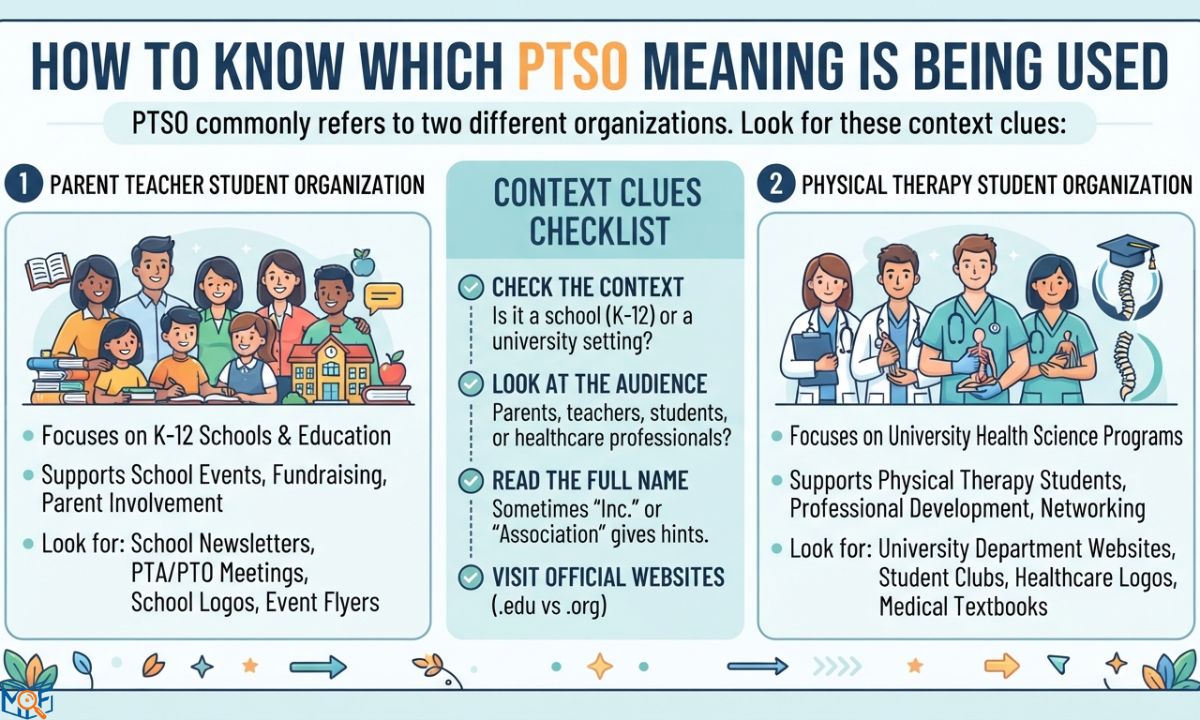
Since PTSO has multiple meanings, context clues are the fastest way to figure out which one applies.
- Photo or outfit comment → almost always the “Put That Sh*t On” compliment
- School newsletter, parent group chat, or PTA-style discussion → Parent Teacher Student Organization
- Support or awareness post → possibly “please tell someone”
- Gaming or fandom server → likely a community-specific inside term
- Academic or clinical writing → post-traumatic stress outcome
When in doubt, look at who sent the message and where. A parent in a school chat and a friend commenting on your TikTok are using two completely different languages, even though the letters match.
PTSO Texting Examples and Real Conversation Samples
Seeing PTSO used in real conversation makes the meaning click faster than a definition alone.
- Example 1 — Fashion compliment Friend: “New fit for tonight 🔥” You: “okay PTSO, you ate with this one”
- Example 2 — Comment section style Comment under a photo: “PTSO fr, this fit is unmatched”
- Example 3 — School context Parent A: “Are you going to the PTSO meeting tonight?” Parent B: “Yes, they’re covering the spring fundraiser.”
- Example 4 — Casual group chat Friend 1: “Just posted my outfit from the concert” Friend 2: “PTSOOO 😭 you look amazing”
How to Use PTSO in a Sentence
Once you know the slang meaning, using it naturally is simple. A few ways it shows up in everyday sentences:
- “She really PTSO’d with that jacket today.”
- “PTSO, that color is perfect on you.”
- “Everyone in the comments was saying PTSO about her prom dress.”
Keep in mind PTSO is casual internet slang, so it fits texting, comments, and captions — not formal writing or professional messages.
How to Reply When Someone Says PTSO to You
If someone comments or texts you PTSO, they’re complimenting your look, so a simple, appreciative reply keeps the energy going. A few natural responses:
- “Thank you 🙏 felt cute in this one”
- “Stop 😭 appreciate you”
- “Took me forever to put this together lol thank you”
There’s no need to overthink it — a short, warm reply is all the moment calls for.
PTSO vs. Similar Gen Z Slang (Drip, Fire, Valid, Cooked)
PTSO belongs to a small family of Gen Z compliment and reaction slang, but each term carries a slightly different meaning and tone.
| Term | Meaning | Typical Use |
| PTSO | You nailed the outfit/look | Fashion and style compliments |
| Drip | Stylish clothing or overall fashion sense | Describing someone’s general style |
| Fire | Extremely good or impressive | Broad compliment, not just fashion |
| Valid | Approved, respected, makes sense | Agreement or approval of a choice |
| Cooked | Doing extremely well — or failing badly | Context-dependent, positive or negative |
PTSO is more specific than “fire” or “valid” because it’s almost always tied directly to appearance and style, rather than being a general-purpose compliment.
Who Uses PTSO? Gen Z vs. Millennials vs. Other Generations

PTSO is primarily used by Gen Z, though its reach has extended into younger Millennials who spend time on the same platforms.
- Gen Z: Uses PTSO regularly, especially in fashion and social media contexts
- Millennials: Recognize and occasionally use it, mostly through exposure to Gen Z content
- Gen X and older: Rarely use the slang meaning and are far more likely to know PTSO only as the school organization
This split is common with internet slang — it clusters heavily among the generation most active on the platforms where it spreads, then fades in familiarity the further removed someone is from that space.
Is PTSO Still Used in 2026? Current Trend Status
Yes, PTSO is still actively used in 2026, particularly in fashion-focused comments, captions, and casual texting among Gen Z. It hasn’t reached the universal recognition of terms like “no cap” or “slay,” but it remains a steady, recognizable compliment within style and social media circles.
Slang trends can fade quickly, so its long-term staying power isn’t guaranteed — but as of now, PTSO continues to show up regularly across TikTok, Instagram, and group chats.
FAQs
What does PTSO mean in slang?
PTSO means “Put That Sh*t On,” a Gen Z compliment about someone’s outfit or style.
What does PTSO stand for in school?
In school, PTSO stands for Parent Teacher Student Organization.
Is PTSO a compliment?
Yes, PTSO is almost always used as a compliment about someone’s look or outfit.
Do Millennials use PTSO?
Some Millennials use PTSO, but it’s most common among Gen Z.
Is PTSO still popular in 2026?
Yes, PTSO is still commonly used in fashion comments and texting in 2026.
Conclusion
So, what does PTSO mean? In most online spaces, it’s a Gen Z compliment for a great outfit or look. In schools, it stands for something completely different — Parent Teacher Student Organization. The right meaning always comes down to context.
Slang like this changes fast, but now you know how to spot it and use it the right way. Keep exploring the site for more Gen Z slang meanings explained in plain English.

John Julian is the founder and head wordsmith at MeaningFacts.com, a dedicated digital resource for word origins, definitions, and cultural linguistics. With over 5 years of experience as a lexicographer and content researcher, John Julian specializes in breaking down complex etymologies into accessible, engaging stories.