
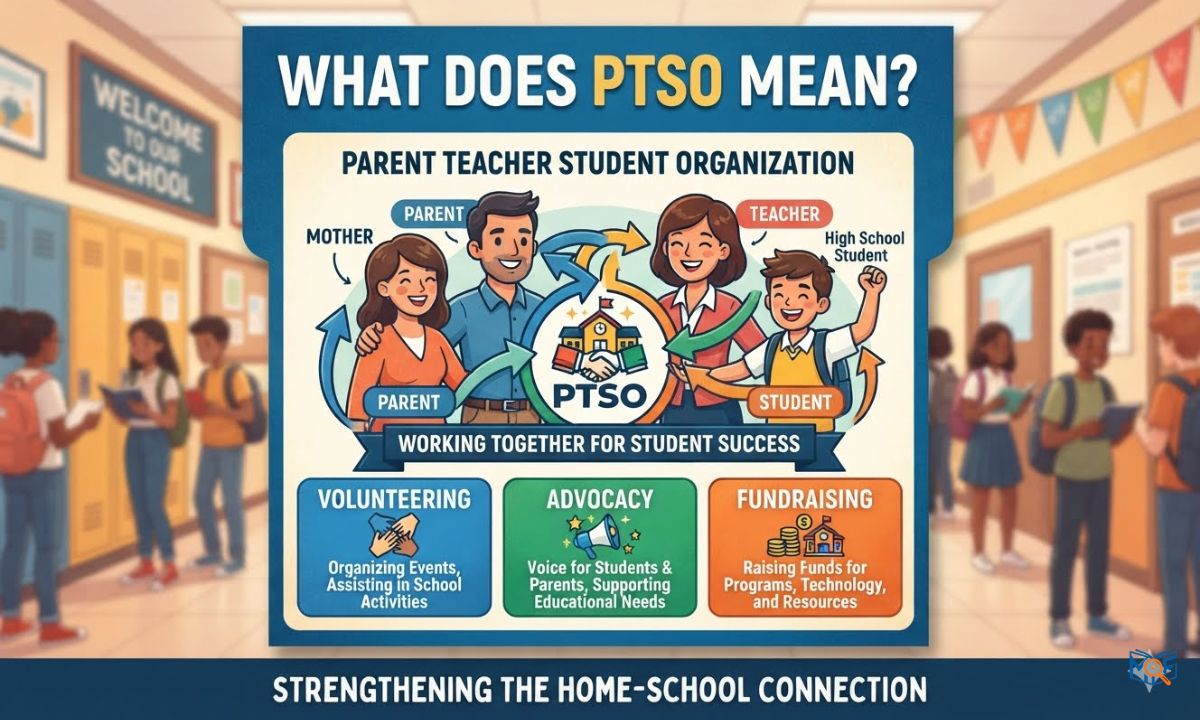

If you’ve come across the term PTSO on a school newsletter, flyer, or website, you’re probably wondering what it actually stands for and why it matters. PTSO stands for Parent-Teacher-Student Organization, a group that brings together parents, teachers, and students to support school activities, events, and community building.
This guide breaks down the full PTSO meaning, explains PTSO Means School, shows how it’s structured, how it differs from a PTA or PTO, and why joining one can make a real difference for your child’s school experience.
What Does PTSO Stand For? (Quick Definition)
PTSO stands for Parent-Teacher-Student Organization.It’s a school-based group made up of parents, teachers, and students who work together to organize events, raise funds, and support school programs. Unlike a traditional PTA, a PTSO gives students a direct seat at the table alongside adults.
PTSO Meaning Explained in Simple Terms
Think of a PTSO as a bridge between home and school. It’s a volunteer-run organization where three groups team up:
- Parents — bring time, resources, and community connections
- Teachers — offer classroom insight and educational priorities
- Students — share their own perspective on what the school needs
Together, these three groups plan fundraisers, school events, and programs that benefit the whole student body. The core idea behind the PTSO meaning in school is shared ownership — everyone affected by school life gets a voice in shaping it.
The History and Origin of PTSO in Schools
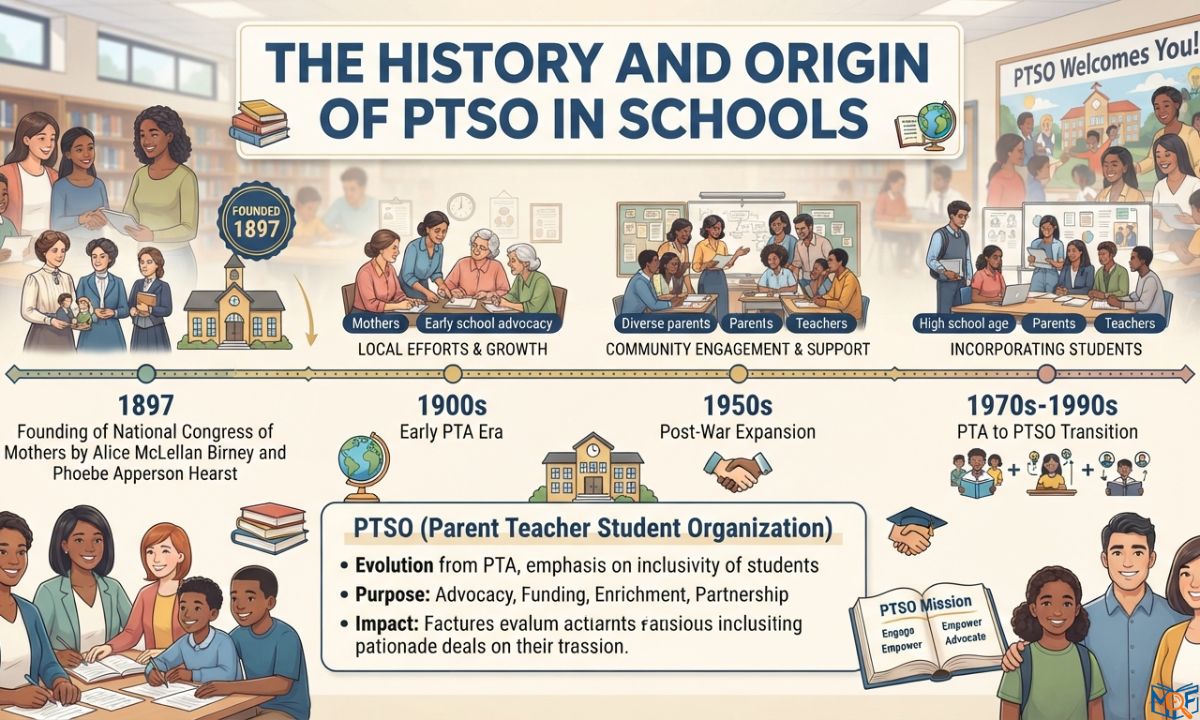
Parent involvement in schools dates back over a century, starting with the National Congress of Mothers in 1897, which later became the National PTA. Over time, many individual schools began forming their own independent groups instead of joining the national PTA network.
Some of these independent groups chose to include students formally in their structure, which gave rise to the PTSO model. This shift reflected a broader trend in education: recognizing that students themselves have valuable input into school culture, not just parents and staff.
PTSO vs. PTA vs. PTO: What’s the Real Difference?
These three acronyms often get mixed up, but there are real differences between them.
| Organization | Full Name | Who’s Involved | Affiliation |
| PTA | Parent-Teacher Association | Parents and teachers | National PTA (dues required) |
| PTO | Parent-Teacher Organization | Parents and teachers | Independent, no national dues |
| PTSO | Parent-Teacher-Student Organization | Parents, teachers, and students | Independent, no national dues |
Quick Answer:
The main difference is that a PTA is affiliated with the National PTA and requires membership dues, while a PTO and PTSO are independently run. A PTSO goes one step further than a PTO by formally including students as active members.
How a PTSO Is Structured (Roles & Leadership Positions)
Most PTSOs follow a simple leadership structure, similar to other volunteer organizations. Common positions include:
- President — oversees the organization and runs meetings
- Vice President — supports the president and steps in when needed
- Secretary — takes meeting minutes and handles communication
- Treasurer — manages the budget and fundraising funds
- Student Representatives — voice student needs and ideas
- Teacher Liaison — connects the group with school staff and administration
Many PTSOs also have committee chairs for specific events, such as fundraising, spirit week, or teacher appreciation.
What Does a PTSO Actually Do? Core Responsibilities
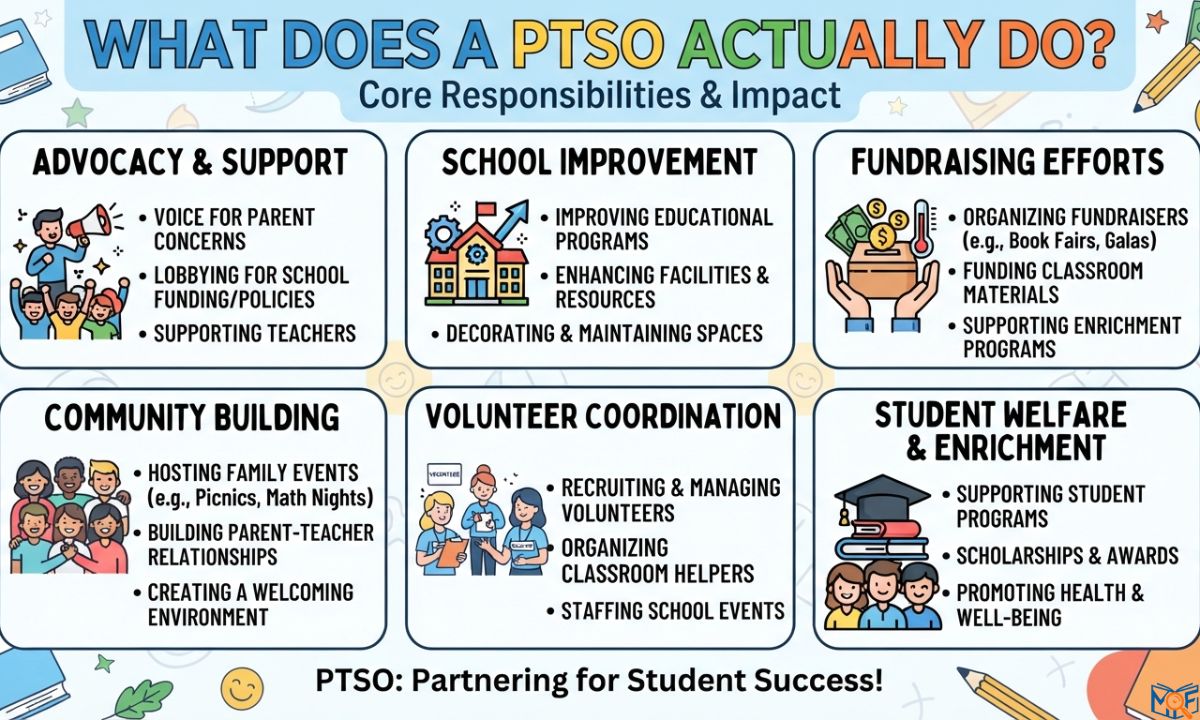
A PTSO’s day-to-day work usually falls into a few key categories:
- Fundraising for school supplies, equipment, or student programs
- Organizing events like dances, carnivals, and spirit days
- Supporting teachers through appreciation events and classroom resources
- Communicating school news and updates to families
- Advocating for student and parent concerns with school administration
The exact focus depends on the school, but the goal is always the same: strengthening the connection between home, classroom, and student life.
How PTSO Meetings Work (Frequency, Format & What to Expect)
Most PTSOs meet once a month, either in person at the school or virtually. Meetings typically last 30 to 60 minutes and follow a simple agenda:
- Welcome and approval of previous meeting minutes
- Treasurer’s report on funds and expenses
- Updates on ongoing or upcoming events
- Open discussion for new ideas or concerns
- Assignment of tasks for the next event
Meetings are usually open to all parents, teachers, and students, even those who aren’t officially members. If you’re wondering what PTSO Means School, it refers to the Parent-Teacher-Student Organization that supports school activities and communication.
The Role of Students in a PTSO

What sets a PTSO apart is real student participation. Students aren’t just there to help set up chairs — they often:
- Vote on how funds should be spent
- Propose event ideas that reflect what students actually want
- Serve as official student representatives on the leadership board
- Help lead committees for specific projects
This gives students practical experience in leadership, communication, and teamwork, while making sure school decisions reflect their actual interests.
How Parents Can Get Involved in a PTSO
Parents don’t need any special experience to join. Common ways to get involved include:
- Attending monthly meetings
- Volunteering at events like book fairs or fun runs
- Joining a committee that matches your skills or interests
- Donating supplies, time, or funds
- Running for a leadership position
Even a small time commitment, like helping at one event per semester, makes a difference.
How Teachers Benefit From and Contribute to a PTSO
Teachers play an important role too, even though the group is largely parent- and student-driven. PTSOs often fund classroom supplies, technology, and field trips that stretch limited school budgets further. In return, teachers contribute by sharing which resources or programs would help students most, giving the group direction rooted in real classroom needs.
This partnership helps teachers feel supported while making sure fundraising efforts actually address what’s needed in the classroom.
Key Benefits of a PTSO for Schools and Communities
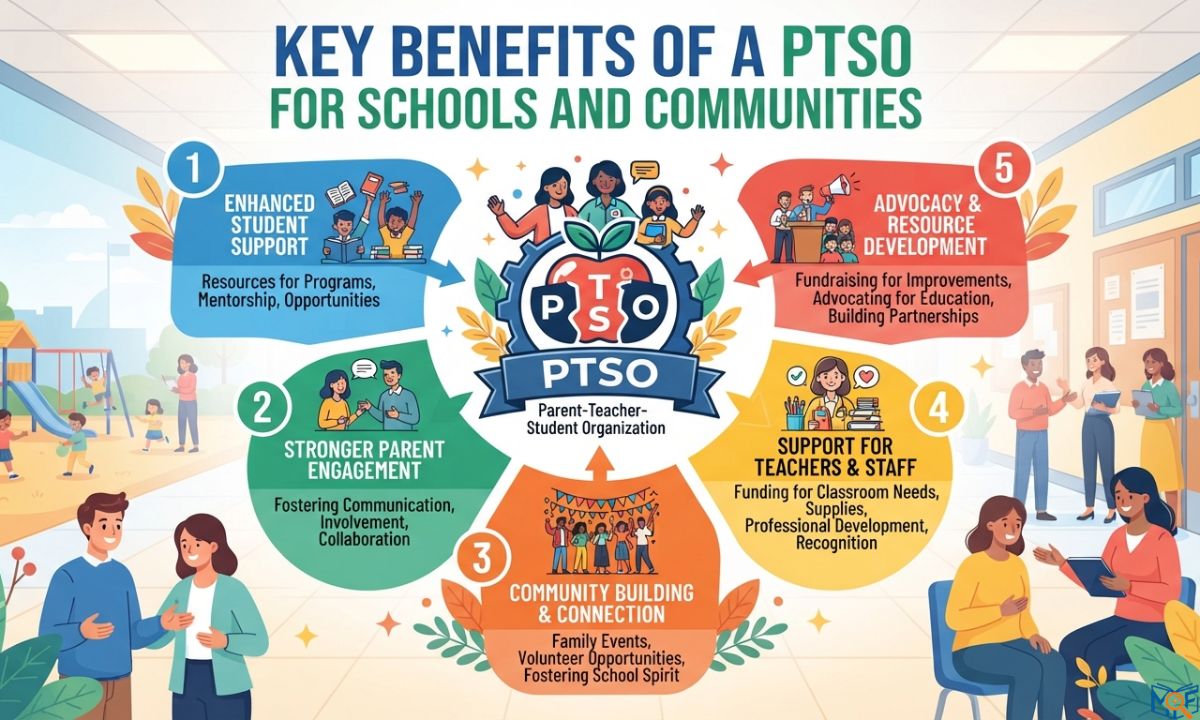
A well-run PTSO benefits the entire school community, not just individual members. It strengthens communication between families and staff, funds programs that schools might not otherwise afford, and builds a stronger sense of community around the school.
Benefits of Joining a PTSO for Parents
- Stay informed about what’s happening at school
- Build relationships with other parents and staff
- Have a direct voice in school decisions
- Develop leadership and organizational skills
Benefits of Joining a PTSO for Students
- Gain real leadership experience
- Build confidence speaking up in group settings
- Help shape events and programs they’ll actually enjoy
- Strengthen college and resume-building experience
FAQs
What does PTSO stand for?
PTSO stands for Parent-Teacher-Student Organization.
Is a PTSO the same as a PTA?
No. A PTSO includes students as members, while a PTA is a parent-teacher group affiliated with the National PTA.
Do you have to pay to join a PTSO?
Most PTSOs don’t charge mandatory dues, though some ask for small voluntary donations.
How often does a PTSO meet?
Most PTSOs meet once a month during the school year.
Can students be members of a PTSO?
Yes. Students are formal members of a PTSO and often hold representative or leadership roles.
Conclusion
Now you know the full PTSO means school: a Parent-Teacher-Student Organization that brings families, staff, and students together. It’s built on teamwork, shared ideas, and real student input. This makes school events and decisions feel more connected to everyone involved.
Whether you’re a parent, teacher, or student, getting involved in a PTSO is an easy way to support your school community. Explore more of our guides to learn what other common school terms and acronyms really mean.

John Julian is the founder and head wordsmith at MeaningFacts.com, a dedicated digital resource for word origins, definitions, and cultural linguistics. With over 5 years of experience as a lexicographer and content researcher, John Julian specializes in breaking down complex etymologies into accessible, engaging stories.