
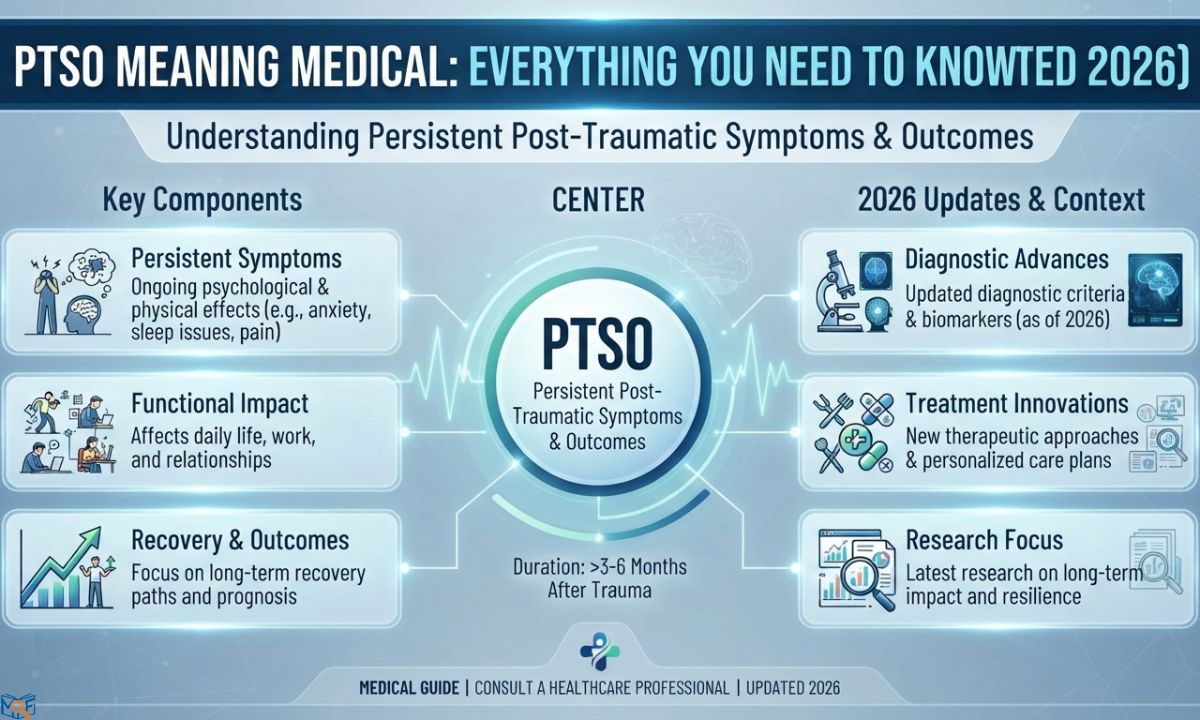

If you’ve stumbled across the letters “PTSO” on a medical form, in a health forum, or in a text from a friend, you’re probably scratching your head right now. Is it a real diagnosis? A typo? Something else entirely?
Here’s the short answer: PTSO is not a recognized medical term. In almost every healthcare context, it’s a mistyped or misremembered version of PTSD (Post-Traumatic Stress Disorder). That said, the letters PTSO do show up legitimately in other fields, which is exactly why so many people end up confused.
This guide breaks down the PTSO meaning medical, what PTSO actually means, why it gets mixed up with PTSD, and what you should do the next time you see it on paperwork or online.
What Does PTSO Stand For? Quick Definition
Quick Answer: PTSO most commonly stands for Parent Teacher Student Organization, a school-based group. In casual or medical-adjacent conversations, it sometimes appears as an informal (and inaccurate) shorthand for Post-Traumatic Stress Disorder (PTSD).
There isn’t one single, universally agreed-upon meaning for PTSO. Instead, its meaning changes completely depending on where you encounter it:
- In schools: Parent Teacher Student Organization
- In casual health talk: An informal mix-up of PTSD
- In transportation: Public Transport Security Office (used in some regions)
- In workplaces: Occasionally used as shorthand for internal processes like “Process, Track, Solve, Optimize”
- On social media: Sometimes used loosely and without a fixed meaning
Because the acronym is so context-dependent, seeing “PTSO” by itself tells you almost nothing. You need to look at where it appeared to figure out what the writer actually meant.
Is PTSO an Official Medical Term? (The Truth Explained)
No. PTSO does not appear in any official medical classification system, including the DSM-5-TR (the manual clinicians use to diagnose mental health conditions) or the ICD-10/ICD-11 coding systems used for medical billing and records.
Doctors, therapists, and psychiatrists are trained to use PTSD, not PTSO, when documenting trauma-related conditions. If a clinician wrote “PTSO” in a chart, it would almost certainly be flagged as either:
- A simple typo
- An autocorrect error
- A misunderstanding by someone unfamiliar with the correct abbreviation
Some people also assume PTSO might be a newer or “updated” version of PTSD. It isn’t. There has been no change to the official terminology, and no medical body has adopted PTSO as an alternative name for any diagnosis.
PTSO vs PTSD: What’s the Real Difference?
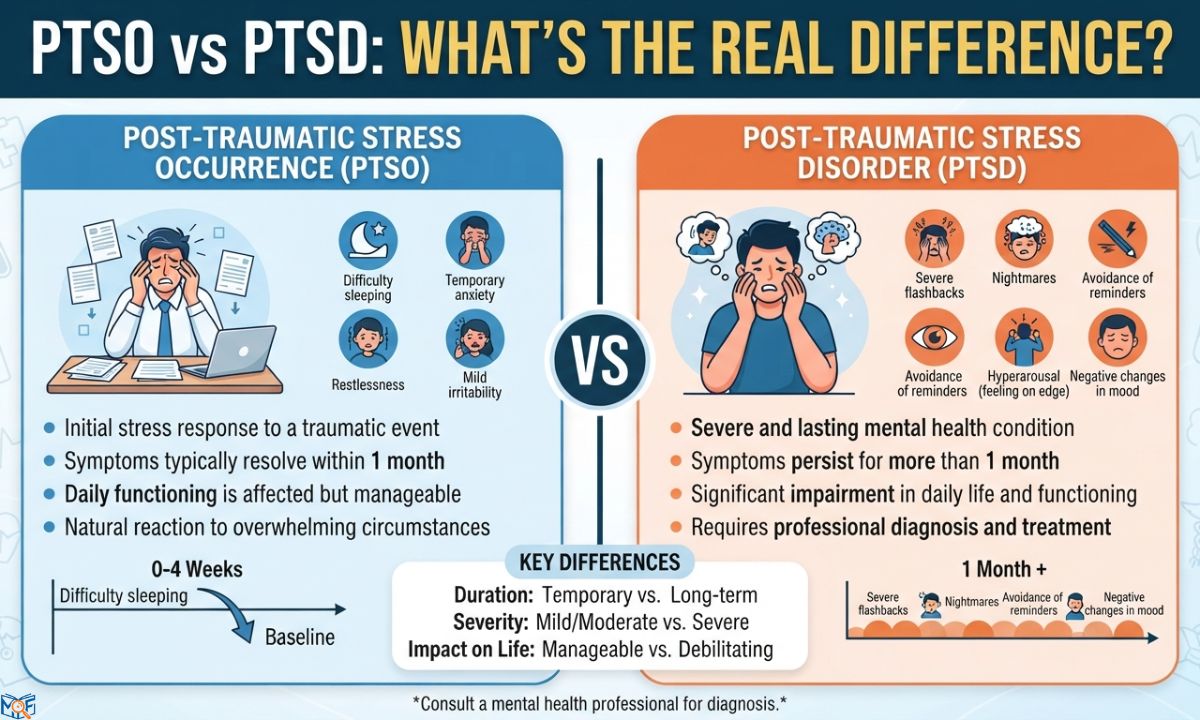
This is the comparison most people are actually searching for, so let’s make it simple.
| Feature | PTSD | PTSO |
| Official medical term? | Yes | No |
| Listed in DSM-5-TR? | Yes | No |
| Meaning | Post-Traumatic Stress Disorder | No fixed medical meaning |
| Used by doctors? | Yes, routinely | No, not as a diagnosis |
| Common outside medicine | Rare | Common (schools, transport, slang) |
PTSD (Post-Traumatic Stress Disorder) is a recognized mental health condition that can develop after someone experiences or witnesses a traumatic event. It has documented symptoms, diagnostic criteria, and treatment pathways.
When searching for the ptso meaning medical, it’s important to know that PTSO simply doesn’t carry the same weight in medicine. When people type “PTSO” while trying to describe trauma-related stress, they’re almost always aiming for PTSD and either misspelling it or misremembering the letter order.
Why People Confuse PTSO with PTSD
The mix-up isn’t as random as it seems. A few things make it easy to swap these two acronyms:
- Similar letters: PTSD and PTSO share three of four letters, so a quick typing slip or autocorrect suggestion can easily switch the D to an O.
- Keyboard proximity: On many keyboards, the letters D and O aren’t far apart, making accidental swaps common on mobile devices.
- Unfamiliarity with the term: People who aren’t in the medical field may genuinely not know the correct abbreviation and guess based on how it sounds.
- Voice-to-text errors: Dictation software sometimes mishears the ending of “PTSD” and transcribes it incorrectly.
- Repeated online errors: Once a misspelling appears in a forum post or comment section, other readers may copy it without realizing it’s wrong.
None of this means someone typing PTSO is trying to mislead anyone. It’s simply an easy typo to make, especially when someone is stressed, distracted, or unfamiliar with clinical language.
Other Common Meanings of PTSO Outside Medicine

Away from healthcare, PTSO has a handful of legitimate uses. Here’s where you’re most likely to run into it:
Parent Teacher Student Organization
This is the most common and most “official” meaning of PTSO. It’s a school-based group similar to a PTA or PTO, except it also includes students as active members. These organizations typically help with fundraising, events, and building stronger connections between families, staff, and students.
Public Transport Security Office
In some regions and transit systems, PTSO refers to the office or department responsible for security within public transportation networks.
Workplace shorthand
Some teams use PTSO informally to represent a process like “Process, Track, Solve, Optimize” in project documentation. This isn’t a standardized business term, so it varies from company to company.
Casual online usage
On social platforms, PTSO occasionally shows up as an informal expression or compliment unrelated to any of the meanings above. Its use here isn’t consistent enough to be considered a fixed slang term.
PTSO in Clinical Notes, Charts, and Healthcare Documentation
If you’ve genuinely spotted “PTSO” written in a clinical note, discharge summary, or medical chart, there are a few realistic explanations:
- Transcription error: Medical staff type quickly, and typos happen, especially with similar-sounding abbreviations.
- Facility-specific shorthand: In rare cases, a specific clinic or department may use an internal, non-standard abbreviation that isn’t recognized elsewhere. This is uncommon and not best practice.
- Software autocorrect: Electronic health record (EHR) systems sometimes autocorrect or auto-suggest abbreviations, occasionally introducing errors.
- Intended meaning was PTSD: By far the most likely explanation.
When researching ptso meaning medical, it is important to know that reputable healthcare documentation follows standardized abbreviation lists approved by the facility or governing medical body. PTSO is not part of any commonly recognized standardized list, which is another strong signal that its appearance in a medical record is unintentional.
What to Do If You See “PTSO” on a Medical Form or Report
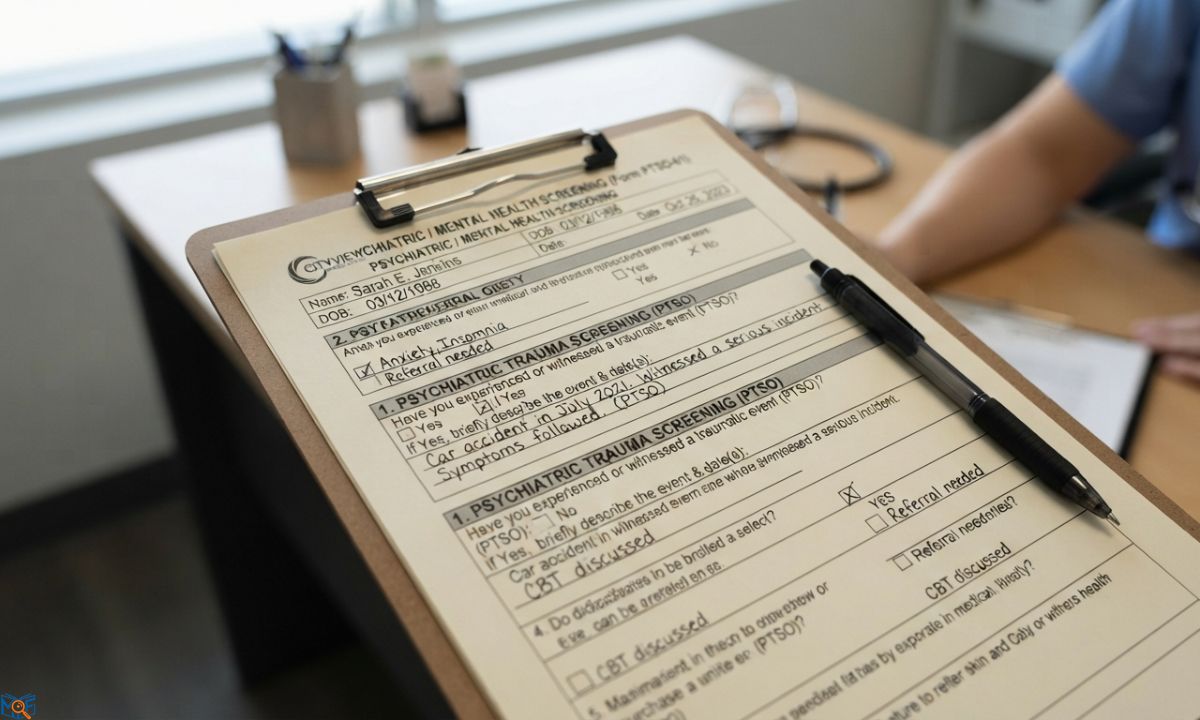
If PTSO shows up somewhere important, like your own medical records, don’t just guess. Here’s a simple step-by-step approach:
- Look at the context. Does the surrounding text mention trauma, stress, anxiety, or mental health? That’s a strong clue it means PTSD.
- Check for a pattern. Is PTSO used once, or repeatedly throughout the document? A one-time appearance is more likely to be a typo.
- Ask your provider directly. The safest option is always to ask the doctor, nurse, or clinic that produced the document to clarify or correct it.
- Request an official correction. If it is a typo, most healthcare systems allow patients to request an amendment to their medical record.
- Don’t self-diagnose based on the abbreviation alone. Whether it says PTSD or PTSO, a diagnosis should come with a full clinical explanation, not just an acronym.
Quick Tip:
Never assume the worst from an unfamiliar abbreviation. Always confirm directly with the source before drawing conclusions about your health.
Symptoms and Facts You Should Know About PTSD (The Real Condition)
Since PTSO so often gets confused with PTSD, it helps to understand what PTSD actually involves.
PTSD can develop after a person experiences or witnesses a traumatic event, such as an accident, violence, combat, or a natural disaster. Common symptom categories include:
- Intrusive memories: Flashbacks, nightmares, or unwanted distressing memories of the event
- Avoidance: Steering clear of places, people, or conversations that bring back the trauma
- Negative changes in mood or thinking: Feelings of guilt, detachment, or persistent negative beliefs
- Changes in physical and emotional reactions: Being easily startled, feeling tense, having trouble sleeping, or experiencing irritability
Symptoms typically need to last more than a month and interfere with daily functioning before a clinician would consider a PTSD diagnosis. Only a qualified mental health professional can make that determination through a proper evaluation, so if you or someone you know is struggling with these symptoms, reaching out to a doctor or licensed therapist is the right next step.
How to Verify Unfamiliar Medical Abbreviations

Medicine is full of shorthand, and it’s easy to feel lost when you run into something unfamiliar. Here’s how to check any abbreviation with confidence:
- Ask the source directly. Your doctor’s office or the department that issued the document is always the most reliable source.
- Use a trusted medical abbreviation reference. Hospitals and medical associations often publish official abbreviation lists.
- Cross-check with your diagnosis or symptoms. If the abbreviation doesn’t match anything discussed during your appointment, flag it.
- Avoid random forums for medical accuracy. Community answers can be helpful for general context but shouldn’t replace professional confirmation.
- Watch for regional differences. Some abbreviations vary between countries or healthcare systems, so an acronym common in one place may be unheard of in another.
Common Medical Abbreviations Often Mistaken for PTSO
PTSO isn’t the only acronym that trips people up. Here are a few real medical abbreviations that get confused with similar-looking terms:
| Abbreviation | Actual Meaning | Often Confused With |
| PTSD | Post-Traumatic Stress Disorder | PTSO |
| PTO | Physical Therapy Order / Parent Teacher Organization | PTSO |
| PTA | Parent Teacher Association / Posterior Tibial Artery | PTSA |
| PT | Physical Therapy | PTSD |
| OT | Occupational Therapy | PTO |
Context always matters more than the letters themselves. The same three or four letters can mean entirely different things depending on the setting, whether that’s a hospital chart, a school newsletter, or a casual text message.
FAQs
What does PTSO mean in medical terms?
PTSO is not an official medical term. It’s usually a typo or misremembered version of PTSD (Post-Traumatic Stress Disorder).
Is PTSO the same as PTSD?
No. PTSD is a recognized clinical diagnosis, while PTSO has no standard medical meaning and is often a mistake for PTSD.
What does PTSO stand for in school?
In most schools, PTSO stands for Parent Teacher Student Organization, a group that includes students alongside parents and teachers.
Why do people write PTSO instead of PTSD?
It usually happens because of typing errors, autocorrect mistakes, or unfamiliarity with the correct clinical abbreviation.
What should I do if I see PTSO on my medical records?
Contact your healthcare provider to confirm whether it was meant to say PTSD or something else, and request a correction if needed.
Conclusion
So, what does PTSO mean in medical terms? In short, it isn’t a real diagnosis. Most of the time, it’s simply a mix-up with PTSD. Outside of medicine, PTSO usually points to a school group or a regional term tied to transportation.
If you ever spot PTSO on a form or report, don’t panic. Check the context, ask your provider, and get a clear answer. Curious about other confusing medical abbreviations? Explore more definitions on our site to stay informed and confident about what you read.

John Julian is the founder and head wordsmith at MeaningFacts.com, a dedicated digital resource for word origins, definitions, and cultural linguistics. With over 5 years of experience as a lexicographer and content researcher, John Julian specializes in breaking down complex etymologies into accessible, engaging stories.